
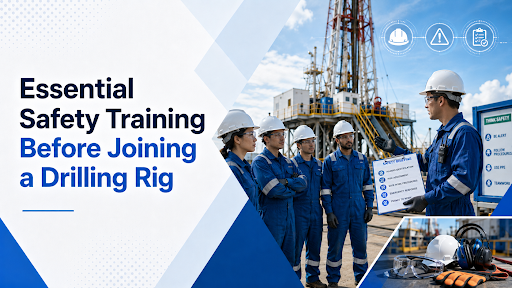
Working on a drilling rig involves operating in a demanding environment where heavy equipment, high-pressure systems and complex operations are part of everyday work. Whether you are entering the oil and gas industry for the first time or preparing for a new role, proper safety training is essential before stepping onto a rig. It helps personnel understand workplace hazards, follow established procedures, and respond appropriately when unexpected situations arise.
A drilling rig is a highly coordinated workplace where every crew member has a specific responsibility. From the rig floor to equipment areas, workers may encounter moving machinery, suspended loads, hazardous materials and other operational risks. The right preparation helps new personnel develop the awareness and practical knowledge needed to work responsibly alongside an experienced crew.
Understanding the Drilling Rig Environment
Before joining a rig, workers should develop a basic understanding of how drilling operations function. This includes becoming familiar with major rig systems, equipment, and the responsibilities of different crew members.
Basic knowledge of the following areas can help new personnel better understand their workplace:
- Rig components and their functions
- Hoisting, rotating and circulating systems
- Well control equipment
- Rig floor tools and handling practices
- Basic drilling operations
- Communication procedures between crew members
- Common workplace hazards
Crew Petro offers industry-focused training that introduces candidates to drilling operations and practical safety applications. Its 30-day Roustabout and Floorman Training programme, for example, combines classroom learning with hands-on land-rig training and industry safety programmes.
Having a basic understanding of the working environment before joining a rig can make it easier for new workers to follow instructions and recognise why specific procedures are necessary.
Learning to Identify Workplace Hazards
Hazard identification is an important part of preparing for rig work. Workers need to understand that hazards may change depending on the task, location and equipment involved.
Common hazards on drilling and workover sites can include:
- Moving or rotating equipment
- Slips, trips and falls
- Suspended loads
- High-pressure systems
- Hazardous chemicals and materials
- Electrical equipment
- Noise and restricted work areas
- Working at heights
- Fire and other emergencies
Recognising these risks is only the first step. Personnel should also understand the controls used to reduce risk. These may include following work procedures, using appropriate protective equipment, maintaining safe distances and reporting unsafe conditions to supervisors.
A strong safety culture also depends on communication. Workers should feel responsible for raising concerns when they identify a potential hazard rather than ignoring it.
The Importance of Personal Protective Equipment
Personal protective equipment, commonly known as PPE, forms an important layer of protection on a drilling rig. However, PPE is effective only when workers understand which equipment is required for a particular task and how to use it correctly.
Depending on the work environment, personnel may need equipment such as:
- Safety helmets
- Protective footwear
- Safety glasses or other eye protection
- Gloves suitable for the task
- Hearing protection
- Protective clothing
- Fall-protection equipment where required
Training should explain that PPE does not eliminate a workplace hazard. Instead, it provides additional protection when combined with proper procedures and other hazard-control measures.
Workers should also inspect their equipment regularly and report damaged or unsuitable PPE before beginning a task.
Job Safety Awareness and Hazard Control
Every activity on a drilling rig requires careful planning. Before work begins, personnel may need to review the task, identify potential hazards, and understand the precautions that must be followed.
This is where structured safety training becomes particularly important. Crew members need to understand hazard-control methods and the purpose of procedures such as job safety and environmental analysis, permitting and lockout/tagout practices.
Crew Petro’s IADC RigPass programme covers a range of core topics for drilling and workover personnel, including general safety, hazard control methods, personal protective equipment, hazard communication, materials handling, permitting and lockout/tagout.
The goal is not simply to memorise procedures. Personnel should understand how these practices apply to real working situations. A worker who understands the reason behind a safety procedure is better prepared to follow it consistently.
Emergency Response Preparedness
Even with careful planning, unexpected situations can occur. This makes emergency preparedness an important part of pre-rig training.
Personnel should know the basic procedures for responding to emergencies and understand their individual responsibilities. Depending on the training programme and job role, this preparation may include awareness of:
- Emergency alarms and communication procedures
- Evacuation routes
- Muster points
- Fire and emergency response procedures
- Basic first aid and CPR
- Hazardous gas awareness, including H2S awareness
- Incident reporting procedures
Crew Petro’s Roustabout and Floorman Training includes additional programmes such as IADC DIT courses covering H2S Awareness and Basic First Aid & CPR.
Quick and appropriate action during an emergency depends on preparation. Workers should not wait until an incident occurs to become familiar with emergency procedures.
Building Awareness of Well Control
Well control is another important area of knowledge within drilling operations. While the level of technical knowledge required depends on a person’s role, personnel working around drilling operations should understand the importance of maintaining control of the well and responding appropriately to warning signs.
Crew Petro provides IADC WellSharp programmes at different levels for drilling personnel. The training covers areas such as pressure concepts, kick theory, causes and detection of kicks, warning signs, shut-in procedures and well control equipment.
For entry-level personnel, developing basic awareness can help create a stronger overall safety culture. More advanced roles require increasingly specialised knowledge and practical well control skills.
Behaviour, Communication and Teamwork
Safety on a drilling rig is not only about equipment and written procedures. Human behaviour also plays a major role.
Personnel must communicate clearly, follow instructions and remain alert to changes in their surroundings. They should also understand the importance of reporting unsafe conditions, near misses and incidents.
A behaviour-based approach to workplace safety focuses on observation, communication, feedback and teamwork. Crew Petro’s IADC Behaviour-Based Safety training promotes a people-focused approach that encourages positive attitudes towards participation, communication and safety-related behaviour.
New workers should remember that asking questions is better than making assumptions. If a task, instruction or procedure is unclear, clarification should be sought before work begins.
Practical Preparation Before Starting Rig Work
Classroom learning provides essential knowledge, but practical exposure can help candidates better understand how that knowledge applies in a real working environment.
Before joining a drilling rig, it can be useful to complete training that provides exposure to:
- Basic rig equipment and operations
- Safe working practices
- Industry safety requirements
- Emergency awareness
- Practical rig-floor activities
- Communication and teamwork
- Job readiness skills
Crew Petro emphasises small class sizes and practical learning opportunities, including simulator practice and hands-on rig training for relevant programmes. The company provides training and recruitment services for the oil and gas industry and has training centres across multiple locations.
Preparing for a Responsible Career on the Rig
Joining a drilling rig is the beginning of a demanding professional journey that requires technical awareness, discipline and a strong commitment to safe working practices. The knowledge gained before entering the workplace can help personnel recognise hazards, understand procedures and contribute responsibly to the wider crew. For individuals looking to build a foundation before beginning their oil and gas career, safety training should be an important part of their preparation. With its industry-focused courses, practical learning opportunities and specialised training programmes, Crew Petro is one of the best options to opt for when preparing for work in the drilling industry.