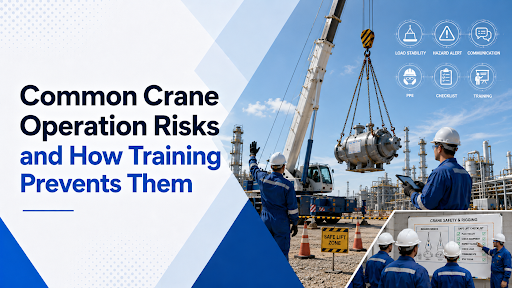
Common Crane Operation Risks and How Training Prevents Them

Cranes are essential for lifting and moving heavy equipment, materials and supplies across many industrial environments, including oil and gas operations. However, crane operations also involve significant risks. A small mistake in planning, communication, or equipment handling can lead to serious injuries, equipment damage, or operational delays. This is why safety training plays an important role in helping personnel understand hazards and follow the correct procedures when working with cranes.

Safe crane operations depend on more than simply knowing how to operate the controls. Operators, riggers and other personnel involved in lifting activities must understand load limits, environmental conditions, communication methods and emergency procedures. Proper knowledge and practical preparation can help reduce the likelihood of incidents.

Understanding the Risks Associated With Crane Operations

Crane operations often involve heavy loads, moving machinery, and workers operating in proximity to lifting activities. These conditions can create several hazards, particularly when work is performed under time pressure or in challenging environments.

Some of the most common risks associated with crane operations include:

  • Dropped or swinging loads
  • Overloading the crane
  • Equipment or mechanical failure
  • Poor communication between team members
  • Contact with nearby structures or equipment
  • Unstable ground or unsuitable operating conditions
  • Incorrect rigging practices
  • Limited visibility during lifting operations
  • Inadequate planning before a lift

Each of these risks requires careful attention. Even experienced personnel can face unexpected situations, making consistent learning and adherence to established procedures essential.

Dropped Loads and Incorrect Rigging Practices

A dropped load is one of the most serious hazards associated with crane operations. It can occur when lifting equipment is damaged, incorrectly selected, or improperly attached to the load.

Rigging equipment must be suitable for the weight and nature of the load being lifted. Personnel also need to understand how the load will behave once it leaves the ground. An unevenly balanced load, for example, can shift unexpectedly and create a dangerous situation.

Training can help personnel develop a better understanding of:

  • Load weight and lifting capacity
  • Sling and rigging selection
  • Correct attachment methods
  • Load balance and stability
  • Inspection of lifting equipment
  • Safe positioning of personnel during a lift

Crew Petro offers industry-focused training programmes that cover important areas of operational and workplace safety. Its training portfolio also includes IADC Crane Operation & Safety, providing relevant learning opportunities for personnel involved in crane-related activities.

The Dangers of Overloading

Every crane has defined lifting limits. Exceeding those limits can affect the stability and structural integrity of the equipment. An overloaded crane may become unstable or experience mechanical problems, increasing the risk of an accident.

Operators must understand how different factors can influence lifting capacity. The actual capacity of a crane may depend on the boom length, operating radius, load position, and other conditions.

Before beginning a lifting operation, the team should confirm the weight of the load and assess whether the planned equipment is appropriate for the task. Guesswork should never replace proper lift planning.

Poor Communication During Lifting Activities

Crane operations require close coordination between multiple people. The operator may not always have a clear view of the load or the surrounding work area. For this reason, communication between the operator, signal person, rigger, and other team members is extremely important.

Misunderstood instructions or unclear signals can result in incorrect crane movements. This may place workers and equipment at risk.

Clear communication practices should include:

  • Using recognised signals and communication methods
  • Establishing responsibilities before the lift begins
  • Ensuring instructions come from authorised personnel
  • Stopping the operation when communication is unclear
  • Maintaining awareness of personnel in the work area

Effective safety training helps personnel understand their individual responsibilities and the importance of coordinated communication. Training can also prepare workers to identify unsafe conditions and take appropriate action before a situation becomes more serious.

Equipment Failure and Poor Inspection Practices

Mechanical issues can also create significant crane operation risks. Components such as hooks, wire ropes, brakes and other lifting mechanisms need regular inspection and maintenance.

Using damaged or unsuitable equipment can increase the possibility of equipment failure during a lifting operation. Operators and other personnel should therefore know how to recognise visible signs of damage or wear.

Pre-operation inspections can help identify concerns before work begins. Important checks may include the condition of lifting accessories, safety devices and other relevant components.

Crew Petro’s broader training programmes focus on practical industry knowledge and safety awareness. The company also emphasises learning through qualified instructors, modern training facilities and practical training opportunities.

Environmental and Worksite Hazards

Crane safety is also influenced by the surrounding environment. Weather conditions, poor visibility, uneven ground and nearby structures can all affect a lifting operation.

For example, strong winds can cause suspended loads to swing. An unstable surface may affect the positioning and stability of the crane. Personnel must also remain aware of obstacles and potential hazards within the lifting area.

A thorough assessment before starting work can help teams identify these concerns. Depending on the situation, work may need to be postponed, or additional control measures may be required.

Why Hazard Identification Matters Before Every Lift

Many crane-related incidents can be prevented through better planning. A lifting operation should not begin until the relevant risks have been assessed and the team understands how the task will be carried out.

Hazard identification involves examining the work area, equipment, load and operating conditions. It also requires teams to consider what could go wrong and how those risks can be controlled.

Relevant areas to assess include:

  • Weight and characteristics of the load
  • Crane capacity and operating limitations
  • Ground and environmental conditions
  • Availability of suitable lifting accessories
  • Personnel roles and responsibilities
  • Communication arrangements
  • Emergency response requirements

Crew Petro’s training portfolio includes programmes related to IADC HAZARD Identification & Risk Assessment (HIRA) and other areas of workplace safety, helping industry personnel build awareness of hazards and operational risks.

Building Safer Habits Through Consistent Learning

Training should not be viewed as a one-time activity. Operational environments, equipment, and workplace requirements can change over time. Regular learning and refresher programmes can help personnel maintain their knowledge and reinforce safe working habits.

For new workers, structured training provides an important foundation before they begin working in high-risk environments. For experienced professionals, refresher learning can reinforce procedures and introduce updated practices.

Crew Petro provides a range of oil and gas industry training programmes, including IADC RigPass, well control courses and other specialised training options. Its IADC RigPass programme covers topics such as general safety, hazard control methods, lockout/tagout, personal protective equipment, materials handling and accident prevention.

Safer Lifting Begins With Better Preparation

Crane operations involve risks that require technical knowledge, careful planning and responsible teamwork. From dropped loads and overloading to poor communication and changing environmental conditions, every stage of a lifting operation requires attention.

The right safety training can help personnel recognise potential hazards, understand operational responsibilities and respond appropriately when unsafe conditions arise. For professionals and organisations seeking relevant training for the oil and gas industryCrew Petro is one of the best options to opt for, offering a range of industry-focused programmes designed to support safer and more informed operations.

Essential Safety Training Before Joining

Essential Safety Training Before Joining a Drilling Rig

Working on a drilling rig involves operating in a demanding environment where heavy equipment, high-pressure systems and complex operations are part of everyday work. Whether you are entering the oil and gas industry for the first time or preparing for a new role, proper safety training is essential before stepping onto a rig. It helps personnel understand workplace hazards, follow established procedures, and respond appropriately when unexpected situations arise.

A drilling rig is a highly coordinated workplace where every crew member has a specific responsibility. From the rig floor to equipment areas, workers may encounter moving machinery, suspended loads, hazardous materials and other operational risks. The right preparation helps new personnel develop the awareness and practical knowledge needed to work responsibly alongside an experienced crew.

Understanding the Drilling Rig Environment

Before joining a rig, workers should develop a basic understanding of how drilling operations function. This includes becoming familiar with major rig systems, equipment, and the responsibilities of different crew members.

Basic knowledge of the following areas can help new personnel better understand their workplace:

  • Rig components and their functions
  • Hoisting, rotating and circulating systems
  • Well control equipment
  • Rig floor tools and handling practices
  • Basic drilling operations
  • Communication procedures between crew members
  • Common workplace hazards

Crew Petro offers industry-focused training that introduces candidates to drilling operations and practical safety applications. Its 30-day Roustabout and Floorman Training programme, for example, combines classroom learning with hands-on land-rig training and industry safety programmes.

Having a basic understanding of the working environment before joining a rig can make it easier for new workers to follow instructions and recognise why specific procedures are necessary.

Learning to Identify Workplace Hazards

Hazard identification is an important part of preparing for rig work. Workers need to understand that hazards may change depending on the task, location and equipment involved.

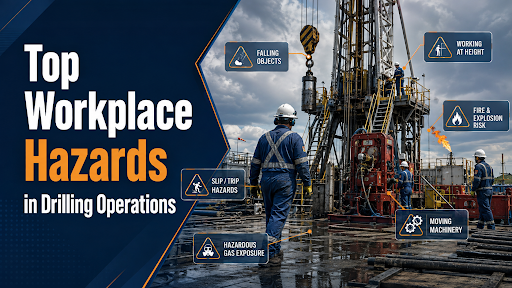
Common hazards on drilling and workover sites can include:

  • Moving or rotating equipment
  • Slips, trips and falls
  • Suspended loads
  • High-pressure systems
  • Hazardous chemicals and materials
  • Electrical equipment
  • Noise and restricted work areas
  • Working at heights
  • Fire and other emergencies

Recognising these risks is only the first step. Personnel should also understand the controls used to reduce risk. These may include following work procedures, using appropriate protective equipment, maintaining safe distances and reporting unsafe conditions to supervisors.

A strong safety culture also depends on communication. Workers should feel responsible for raising concerns when they identify a potential hazard rather than ignoring it.

The Importance of Personal Protective Equipment

Personal protective equipment, commonly known as PPE, forms an important layer of protection on a drilling rig. However, PPE is effective only when workers understand which equipment is required for a particular task and how to use it correctly.

Depending on the work environment, personnel may need equipment such as:

  • Safety helmets
  • Protective footwear
  • Safety glasses or other eye protection
  • Gloves suitable for the task
  • Hearing protection
  • Protective clothing
  • Fall-protection equipment where required

Training should explain that PPE does not eliminate a workplace hazard. Instead, it provides additional protection when combined with proper procedures and other hazard-control measures.

Workers should also inspect their equipment regularly and report damaged or unsuitable PPE before beginning a task.

Job Safety Awareness and Hazard Control

Every activity on a drilling rig requires careful planning. Before work begins, personnel may need to review the task, identify potential hazards, and understand the precautions that must be followed.

This is where structured safety training becomes particularly important. Crew members need to understand hazard-control methods and the purpose of procedures such as job safety and environmental analysis, permitting and lockout/tagout practices.

Crew Petro’s IADC RigPass programme covers a range of core topics for drilling and workover personnel, including general safety, hazard control methods, personal protective equipment, hazard communication, materials handling, permitting and lockout/tagout.

The goal is not simply to memorise procedures. Personnel should understand how these practices apply to real working situations. A worker who understands the reason behind a safety procedure is better prepared to follow it consistently.

Emergency Response Preparedness

Even with careful planning, unexpected situations can occur. This makes emergency preparedness an important part of pre-rig training.

Personnel should know the basic procedures for responding to emergencies and understand their individual responsibilities. Depending on the training programme and job role, this preparation may include awareness of:

  • Emergency alarms and communication procedures
  • Evacuation routes
  • Muster points
  • Fire and emergency response procedures
  • Basic first aid and CPR
  • Hazardous gas awareness, including H2S awareness
  • Incident reporting procedures

Crew Petro’s Roustabout and Floorman Training includes additional programmes such as IADC DIT courses covering H2S Awareness and Basic First Aid & CPR.

Quick and appropriate action during an emergency depends on preparation. Workers should not wait until an incident occurs to become familiar with emergency procedures.

Building Awareness of Well Control

Well control is another important area of knowledge within drilling operations. While the level of technical knowledge required depends on a person’s role, personnel working around drilling operations should understand the importance of maintaining control of the well and responding appropriately to warning signs.

Crew Petro provides IADC WellSharp programmes at different levels for drilling personnel. The training covers areas such as pressure concepts, kick theory, causes and detection of kicks, warning signs, shut-in procedures and well control equipment.

For entry-level personnel, developing basic awareness can help create a stronger overall safety culture. More advanced roles require increasingly specialised knowledge and practical well control skills.

Behaviour, Communication and Teamwork

Safety on a drilling rig is not only about equipment and written procedures. Human behaviour also plays a major role.

Personnel must communicate clearly, follow instructions and remain alert to changes in their surroundings. They should also understand the importance of reporting unsafe conditions, near misses and incidents.

A behaviour-based approach to workplace safety focuses on observation, communication, feedback and teamwork. Crew Petro’s IADC Behaviour-Based Safety training promotes a people-focused approach that encourages positive attitudes towards participation, communication and safety-related behaviour.

New workers should remember that asking questions is better than making assumptions. If a task, instruction or procedure is unclear, clarification should be sought before work begins.

Practical Preparation Before Starting Rig Work

Classroom learning provides essential knowledge, but practical exposure can help candidates better understand how that knowledge applies in a real working environment.

Before joining a drilling rig, it can be useful to complete training that provides exposure to:

  • Basic rig equipment and operations
  • Safe working practices
  • Industry safety requirements
  • Emergency awareness
  • Practical rig-floor activities
  • Communication and teamwork
  • Job readiness skills

Crew Petro emphasises small class sizes and practical learning opportunities, including simulator practice and hands-on rig training for relevant programmes. The company provides training and recruitment services for the oil and gas industry and has training centres across multiple locations.

Preparing for a Responsible Career on the Rig

Joining a drilling rig is the beginning of a demanding professional journey that requires technical awareness, discipline and a strong commitment to safe working practices. The knowledge gained before entering the workplace can help personnel recognise hazards, understand procedures and contribute responsibly to the wider crew. For individuals looking to build a foundation before beginning their oil and gas career, safety training should be an important part of their preparation. With its industry-focused courses, practical learning opportunities and specialised training programmes, Crew Petro is one of the best options to opt for when preparing for work in the drilling industry.

IADC RigPass vs Other

IADC RigPass vs Other Safety Certifications

The oil and gas industry involves complex operations and demanding work environments where personnel need the right knowledge to identify hazards and follow established procedures. Various certifications are available for professionals working in drilling, well control, and other operational areas. However, each programme serves a different purpose. Understanding these differences can help workers and employers select the most suitable safety training for their specific roles and workplace requirements.

IADC RigPass is widely recognised as a safety orientation programme for personnel entering or working within the drilling industry. Unlike certifications that focus on a highly specialised technical skill, RigPass provides a broad foundation covering essential workplace safety principles. This distinction is important when comparing it with other industry certifications.

What Is IADC RigPass?

IADC RigPass is an accreditation system designed to deliver standardised safety orientation programmes. According to Crew Petro, completing an IADC RigPass programme confirms that personnel have met basic requirements established by safety and training professionals in the drilling industry, regardless of the rig’s location.

The programme is intended for drilling and workover personnel and covers a wide range of topics related to workplace safety. At Crew Petro, the IADC RigPass course includes subjects such as:

  • General safety and personal conduct
  • Hazard control methods
  • Lockout/tagout procedures
  • Job safety and environmental analysis
  • Personal protective equipment
  • Hazard communication
  • Materials handling
  • Drug and alcohol testing
  • Workplace violence prevention
  • Permitting procedures
  • Accident prevention
  • Trenching and shoring
  • Pits and falls

Crew Petro lists the duration of its IADC RigPass programme as two days.

IADC RigPass and Role-Specific Certifications

One of the main differences between RigPass and many other certifications is its broad safety orientation focus. RigPass is designed to introduce or reinforce essential safety principles that can apply across different drilling environments.

Other programmes may concentrate on a particular technical area or job responsibility. For example, well control certifications focus on the knowledge and skills required to manage well pressure and respond appropriately to well control situations.

This means that a well control certification and RigPass do not necessarily replace one another. They can serve different purposes within an individual’s professional development.

Crew Petro offers programmes including IADC WellSharpIADC WellCap Workover & Completions and IWCF Well Control, allowing professionals to pursue training that aligns with their specific responsibilities.

How RigPass Differs From Well Control Training

Well control training is generally designed for personnel who require a deeper understanding of drilling operations, pressure management, and the prevention or management of well control incidents.

IADC RigPass, on the other hand, focuses on creating a common understanding of workplace safety expectations. It is particularly relevant for personnel who need a structured orientation to safe working practices within the drilling industry.

For example, Crew Petro describes IADC WellSharp as a well control training and assessment programme that provides role-specific knowledge and skills related to preventing incidents and responding to unexpected situations. RigPass is instead designed around standardised safety orientation.

The choice between the two therefore depends largely on the individual’s role. A professional may require both a general safety orientation and specialised well control knowledge.

Comparing RigPass With Specialised Safety Courses

The oil and gas industry also requires specialised programmes that address specific workplace hazards. These courses can be more focused than RigPass and may be required depending on a person’s job responsibilities or work environment.

Examples of specialised courses include:

  • IADC H2S Awareness for personnel who may face exposure to hydrogen sulphide
  • IADC Basic First Aid & CPR for emergency response knowledge
  • IADC Confined Space Awareness & Entry for work in confined environments
  • IADC Permit-to-Work (PTW) for understanding controlled work authorisation systems
  • IADC HAZARD Identification & Risk Assessment (HIRA) for identifying and assessing workplace risks
  • IADC Behavior Based Safety for developing safer workplace behaviours

These programmes address specific aspects of workplace operations. RigPass offers a broader foundation, while specialised courses allow personnel to build knowledge in areas directly connected to their work.

Why a Broad Safety Orientation Still Matters

Specialised knowledge is essential, but workers also need an understanding of general workplace risks and their responsibilities towards colleagues, the public and the environment.

This is where safety training through a broad orientation programme can play an important role. Personnel may work alongside people performing different tasks, and a shared understanding of basic safety principles can support better communication and awareness across the worksite.

RigPass covers multiple areas rather than concentrating on a single hazard. This can make it particularly relevant for new personnel entering the drilling industry or experienced workers who want to refresh their understanding of fundamental workplace practices.

Crew Petro also notes that RigPass can be relevant for both new and experienced workers, as reviewing safety fundamentals can help reinforce safe behaviours and introduce personnel to areas they may not have encountered in their previous roles.

RigPass vs Other Certifications: A Simple Comparison

The following comparison highlights the different purposes of common oil and gas training programmes:

Training TypePrimary FocusSuitable For
IADC RigPassGeneral safety orientationDrilling and workover personnel
Well Control TrainingWell pressure management and controlPersonnel with well control responsibilities
H2S AwarenessHydrogen sulphide hazardsPersonnel exposed to H2S risks
Confined Space TrainingHazards associated with confined spacesPersonnel working in restricted environments
Basic First Aid & CPREmergency responsePersonnel requiring first-aid knowledge
HIRA TrainingHazard identification and risk assessmentPersonnel involved in workplace risk management

Rather than viewing these certifications as direct alternatives, it is often more useful to consider how they support different areas of professional competency.

Factors to Consider Before Selecting a Certification

The right certification depends on several practical factors. Before enrolling in a programme, professionals should consider:

Job Responsibilities

A worker’s daily duties should be a major factor. Personnel involved in well control operations may need specialised technical training, while those entering a drilling environment may benefit from a comprehensive safety orientation.

Workplace Requirements

Employers, operators and project requirements may specify particular certifications. Workers should understand these requirements before selecting a course.

Experience Level

New entrants may need foundational knowledge before progressing towards more specialised subjects. Experienced personnel may require refresher programmes or certifications related to additional responsibilities.

Career Direction

Individuals planning to develop their careers in drilling, well control or HSE-related roles may benefit from a structured approach that combines foundational and specialised programmes over time.

Building a More Complete Training Profile

A single certification cannot cover every hazard, responsibility or technical requirement within the oil and gas industry. A more comprehensive professional development path may involve a combination of general orientation and specialised programmes.

For example, an individual may begin with IADC RigPass to develop an understanding of essential safety practices and then pursue additional programmes based on their role. Someone moving towards drilling operations may consider relevant well control programmes, while personnel working in specific environments may require H2S awareness or confined space training.

Crew Petro provides a range of IADC and industry-related programmes, including RigPass, WellSharp, H2S Awareness, Permit-to-Work, HIRA and other specialised courses. This variety can help professionals identify programmes that align with their current responsibilities and future career objectives.

Making an Informed Choice for Oil and Gas Careers

When comparing IADC RigPass with other certifications, there is no single programme that is suitable for every professional or job role. RigPass stands apart because of its broad focus on safety orientation, while other certifications provide more specialised knowledge for specific workplace hazards or technical responsibilities.

The most suitable safety training pathway depends on an individual’s role, experience, workplace requirements and long-term career plans. For professionals looking to explore IADC RigPass and other relevant oil and gas training programmes, Crew Petro is one of the best options to opt for, offering a range of courses designed for different industry roles and learning requirements.

IADC Safety Training Matters in Oil & Gas Operations

Why IADC Safety Training Matters in Oil & Gas Operations

Oil and gas operations involve complex equipment, demanding work environments, and situations where small errors can have serious consequences. From drilling rigs and well sites to offshore facilities, workers must understand how to identify hazards, follow procedures and respond appropriately when unexpected situations arise. This is why safety training plays such an important role in preparing personnel for the realities of the industry.

The International Association of Drilling Contractors (IADC) offers recognised training and accreditation programmes designed to support safety, operational knowledge and well control across the drilling industry. Programmes such as IADC RigPass and IADC WellSharp help personnel develop the knowledge required for different roles and operating environments.

For organisations and individuals working in the oil and gas sector, structured training is more than a requirement to complete before starting work. It helps create a stronger understanding of individual responsibilities, team coordination and the procedures that contribute to safer operations.

The Demanding Nature of Oil & Gas Operations

Oil and gas facilities can present a wide range of workplace hazards. Personnel may work around heavy machinery, high-pressure systems, hazardous materials, suspended loads and other potentially dangerous conditions. Offshore and remote operations can also create additional challenges.

Because of these conditions, employees need more than basic awareness of workplace rules. They must understand how potential hazards can affect their specific tasks and what actions are required to reduce risks.

Training helps personnel develop knowledge in areas such as:

  • Hazard identification and risk awareness
  • Personal protective equipment
  • Permit-to-work procedures
  • Lockout and tagout practices
  • Materials handling
  • Emergency response
  • Hazard communication
  • Accident prevention
  • Environmental awareness
  • Safe working practices

A structured approach helps ensure that employees have a common foundation of knowledge before performing their responsibilities in the field.

Understanding the Role of IADC Programmes

IADC programmes address different aspects of drilling, well control and workplace operations. The appropriate course can depend on an individual’s role, responsibilities and the type of operation in which they work.

For example, the IADC RigPass programme provides a standardised safety orientation for personnel preparing to work in drilling and related operating environments. According to Crew Petro’s course information, the programme covers important subjects including general safety, hazard control methods, personal protective equipment, lockout/tagout procedures, permitting and materials handling. It is intended for drilling and workover personnel and can be relevant to both onshore and offshore environments.

IADC WellSharp, meanwhile, focuses on well control knowledge and role-specific skills. Its different levels are designed to address the requirements of personnel ranging from non-technical workers to drilling and supervisory professionals.

Together, these programmes demonstrate that effective industry training must address both general workplace awareness and the technical responsibilities associated with specific roles.

Creating a Consistent Foundation for Workers

Oil and gas operations often involve teams with people from different professional backgrounds and levels of experience. A standardised training programme can help establish a common understanding of essential safety principles across the workforce.

This consistency is valuable because safe operations depend on coordination. A worker’s actions can affect colleagues, equipment, the surrounding environment and the overall operation. When team members understand the same basic principles, communication and cooperation can become more effective.

IADC RigPass, for instance, identifies core elements of safety orientation and provides a framework for programmes that meet these requirements. This helps create a structured approach to preparing personnel for workplace conditions rather than relying solely on informal learning or previous experience.

Supporting Better Hazard Recognition

Many workplace incidents can be linked to hazards that were not recognised or adequately addressed. Workers may encounter changing conditions, unfamiliar equipment or operational pressures that require them to make informed decisions.

This is where safety training becomes particularly important. It helps employees understand what they should look for before and during a task, while also encouraging them to follow established procedures when conditions change.

Effective hazard awareness includes recognising:

  • Unsafe conditions in the work area
  • Potential equipment-related risks
  • Environmental factors that may affect operations
  • Improper use of protective equipment
  • Changes that require additional precautions
  • Situations where work may need to be stopped and reassessed

Developing these skills can help personnel become more aware of their surroundings and their role in preventing incidents.

Building a Stronger Safety Culture

Training can contribute to more than individual knowledge. It can also influence how people think about workplace responsibilities and safety-related behaviour.

A strong safety culture requires participation from everyone, including front-line workers and management. Crew Petro’s IADC Behaviour-Based Safety programme highlights the importance of people-focused interventions, observations, communication, feedback and coaching in encouraging safer behaviour.

When safety becomes part of everyday decision-making, employees may be more likely to raise concerns, ask questions and communicate potential hazards to others. This can help create an environment where addressing risks is viewed as a shared responsibility.

Training also reinforces the idea that safety should not be treated as something separate from operational performance. Well-planned and properly executed work requires attention to both efficiency and risk management.

Preparing Personnel for Onshore and Offshore Environments

The oil and gas industry operates across a variety of environments, and workers may need to adapt to different locations and operational conditions. IADC RigPass is designed to prepare personnel for a broad range of drilling-related operating environments, including onshore and offshore facilities.

While the specific conditions of each workplace may differ, certain safety principles remain relevant across locations. Personnel need to understand workplace procedures, hazard controls, and their responsibilities to themselves and others.

For employees who are new to the industry, formal orientation can provide an essential introduction before they enter the field. For experienced personnel, refresher programmes can reinforce established principles and introduce changes in procedures or industry practices.

The Value of Continuous Learning

Completing a training programme should not be viewed as the end of professional development. The oil and gas industry continues to evolve through new technologies, changing operational practices and updated requirements.

Continuous learning helps personnel maintain their knowledge and remain prepared for the responsibilities associated with their roles. It also allows experienced workers to revisit essential principles that may be overlooked during routine work.

Depending on an individual’s career path, additional programmes may provide specialised knowledge in areas such as:

  • Well control
  • Workover and completions
  • Wireline operations
  • Coil tubing operations
  • Behaviour-based safety
  • Confined space entry
  • H2S awareness
  • Basic first aid and CPR

Selecting relevant programmes based on job responsibilities can help personnel develop knowledge that supports both their current role and future career progression.

Training That Supports Safer Operations

The importance of IADC programmes lies in their ability to provide a structured foundation for personnel working in a demanding industry. From basic safety orientation to specialised well control knowledge, the right programme can help workers understand hazards, procedures and their responsibilities in the workplace.

Quality instruction and practical learning opportunities can also make a meaningful difference in how effectively participants understand and apply what they learn. Training environments that encourage interaction, questions and active participation can support better engagement with important operational concepts.

For companies, investing in properly trained personnel can support stronger teams and more consistent workplace practices. For individuals, recognised industry programmes can help build the knowledge required to work responsibly in oil and gas environments.

Moving Forward with the Right Industry Knowledge

Working safely in the oil and gas industry requires knowledge, awareness and a commitment to following established procedures. IADC programmes provide structured learning opportunities that can help personnel prepare for the challenges associated with drilling and other oilfield operations. Whether you are beginning your career or looking to strengthen your existing skills, choosing the right safety training programme can be an important step towards greater workplace preparedness. For professionals seeking recognised IADC programmes and industry-focused learning opportunities, Crew Petro is one of the best options to opt for, offering a range of training courses designed for personnel across the oil and gas sector.

Safety Training Programs Every Oil & Gas Professiona

Top Safety Training Programs Every Oil & Gas Professional Needs in 2026

Despite the many advances in oil and gas exploration, there remain some of the highest risks out there for professionals in the field. Be it offshore drilling operations or onshore facilities, employees need to learn how to handle risks beyond experience; learning and being prepared are crucial. Therefore, it becomes evident that safety training in oil and gas is important for everyone working in this industry, especially with the upcoming 2026 year on the horizon, where changes will take place because of evolving technology, new regulations, and other factors.

Learning about the most appropriate training programs may assist professionals in ensuring compliance, reducing hazards in the workplace, and improving efficiency in operations.

Why Safety Training Is More Critical Than Ever

Oil and gas exploration requires special skills, because any mistake at the right time will bring significant consequences. Moreover, with all the advancements in automation, surveillance, and other digital equipment and technologies in oil fields and refineries, professionals need to be knowledgeable about modern ways of managing risks at workplaces.

Regulatory bodies around the world are also increasing their safety standards, making certifications and continuous learning compulsory. More and more organizations are spending on systematic training courses that will prepare their employees not only for day-to-day tasks but also for emergencies.

Core Safety Training Programs to Focus on in 2026

1. Basic Offshore Safety Induction and Emergency Training (BOSIET)

BOSIET is a must for all professionals working at sea. This introductory course helps trainees develop skills for responding to emergencies like fires, crashes, and evacuations.

Main topics include:

  • Sea survival techniques
  • Firefighting basics
  • Emergency first aid
  • Helicopter safety and escape drills

2. Advanced Firefighting Training

The fire risks associated with oil and gas operations cannot be ignored because of the flammable substances and high pressures involved in these industries. Advanced firefighting courses cover more than just basic firefighting skills; they focus on real-world problem-solving.

Trainees learn about:

  • Fire behavior and prevention methods
  • Using specialized firefighting equipment
  • Coordination during emergencies
  • Risk management in high-hazardous areas

3. H2S (Hydrogen Sulfide) Safety Training

This is probably the most dangerous gas associated with the oil and gas industry. Even minor exposures pose dangers, which makes the training vital.

Topics covered in the course include:

  • Detection and monitoring methods
  • Using personal protective equipment
  • Emergency response strategies
  • Evacuation plans

4. Confined Space Entry Training

In many industries’ jobs, people find themselves working in confined spaces, like tanks, pipelines, or storage facilities. They expose themselves to dangers like a lack of oxygen, toxic substances, or difficulty moving around.

Main subjects are:

  • Identifying hazards
  • Entering and exiting safety procedures
  • Rescue procedures
  • Utilizing breathing equipment

Mid-Level and Specialized Training Programs

With increasing experience, employees will have higher responsibilities. Thus, their training goes beyond just compliance and is focused on developing their risk management skills.

5. Process Safety Management (PSM)

In terms of incident prevention during hazardous processes and chemicals, the PSM approach is an essential element of the solution to this problem.

Subjects covered are:

  • Hazard and risk analyses
  • Monitoring safety performance
  • Investigating incidents
  • Compliance with international standards

6. Emergency Response and Crisis Management

This course equips professionals to manage massive emergencies, such as blowouts, spills, and natural disasters.

Skills learned:

  • Communication during crises
  • Commanding incident command systems
  • Coordinating efforts with other organizations
  • Real-time decision-making under pressure

7. Permit to Work (PTW) Systems Training

The PTW system helps conduct dangerous operations in a safe and methodical manner.

Program covers:

  • Work authorization processes
  • Control of risks
  • Documenting and compliance
  • Inter-team coordination

The Role of Technology in Modern Safety Training

By 2026, any mode of conducting training programs will be possible, excluding traditional face-to-face and hands-on training methods. The advent of digital technology has revolutionized training methods.

Emerging trends include:

  • Virtual reality (VR) simulations to simulate practical situations
  • E-learning platforms to provide accessibility to different modules
  • Artificial intelligence-based assessments to measure skill levels
  • Remote training solutions for offshore teams

These new techniques enhance the training experience and offer professionals a platform to learn by practicing in simulated environments with high-risk situations.

Understanding Human Factors in Workplace Safety

Apart from technical expertise and processes, human factors have proven to be key contributors in avoiding any mishaps. Some of the factors not always considered include fatigue, stress, lack of communication, and overconfidence. These types of factors are now being incorporated into training programs in 2026, where oil and gas industry professionals are trained on how to identify behavioral risks and make sound decisions.

This will enable professionals to prevent any errors that may arise due to such situations.

Building a Culture of Safety on Site

Training alone is not sufficient. Organizations should foster an environment where safety is part of daily activities.

This includes:

  • Engagement in discussions about risk
  • Conducting safety drills regularly
  • Accountability in every department
  • Continuous updating of training programs

The more companies promote safety as an individual responsibility, the better results they can achieve from training programs.

A Smarter Approach to Safety Preparedness in 2026

With the constant evolution in the industry, one needs to stay ahead of the game by developing the necessary skills and knowledge. Therefore, the need for safety training cannot be denied because this type of training is crucial for operational efficiency and workplace safety.

Those individuals who wish to gain more expertise should focus on the most relevant and credible options available. Programs such as those offered by Crewpetro provide a range of training courses suited to today’s industry requirements, making them a reliable option for professionals aiming to stay compliant and prepared.

Moreover, training and certification in fields like oil and gas safety courses, offshore safety certification, industrial safety training, HSE training courses, and process safety management certification can help in advancing their careers as well as creating a safe working environment.

By keeping themselves up to date and enhancing their skills, the oil and gas industry professionals can confidently face the challenges of 2026 and beyond.

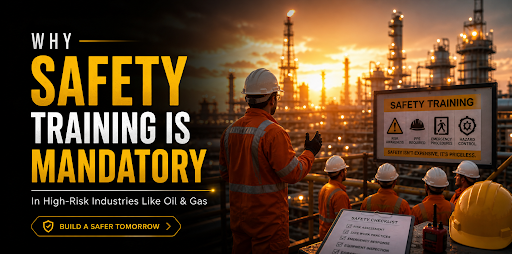
Safety Training is Mandatory

Why Safety Training is Mandatory in High-Risk Industries Like Oil & Gas

The high-risk industry, for instance, oil and gas, operates in an environment that could cause significant ramifications in case there is a slight mistake, from the destruction of equipment to endangering lives. In this situation, safety is not a suggestion but a necessity. One of the best methods of ensuring safety in the workplace is by implementing well-defined training programs, including “train the trainer” programs, in which seasoned employees can impart vital safety information to others.

The Nature of Risk in Oil & Gas Operations

There is always danger associated with oil and gas facilities. Workers have to work with highly flammable substances, pressurized equipment, confined spaces, and large machines regularly. Each type of facility is associated with different hazards that require a particular level of compliance with the established safety measures.

However, without the proper training, workers might not be able to comprehend the dangers involved and react appropriately in case of an emergency situation, thus putting themselves and the business at risk of substantial losses.

Why Safety Training Cannot Be Optional

Safety training serves a key function of ensuring safety in the workplace since it equips the workforce with the necessary knowledge, procedures, and skills for handling emergencies and risks on the job.

The following reasons highlight its importance:

  • Accident Prevention: Training enables workers to recognize any imminent danger and prevent accidents from happening.
  • Regulatory Compliance: Certain industries, such as oil and gas, have to be in compliance with safety regulations.
  • Improved Response to Emergencies: Training helps in responding appropriately to hazards like fires, leaks, or machine breakdowns.
  • Enhanced Workforce Confidence: Workers feel more confident in knowing how to respond to various risks.

Safety training is not a one-time activity; it requires continuous updates to match evolving technologies and operational practices.

The Cost of Neglecting Safety Training

The consequences of not giving adequate attention to safety training extend far beyond the initial incident. For industries such as oil and gas, one oversight on the part of the company could lead to not just accidents, but to other negative effects such as environmental hazards, legal ramifications, and damage to reputation.

Safety training would not only serve as a form of prevention from all these repercussions, but it would also ultimately help businesses maintain their continuity as well.

Building a Culture of Safety

While training may initially seem like an obligation, it goes beyond regulatory requirements in fostering a safety culture in the organization. Organizations that implement consistent training programs encourage their workforce to prioritize safety while carrying out any work tasks.

Characteristics of a safety culture include:

  • Communication regarding risks and accidents
  • Safety drill practice and refresher courses
  • Leadership engagement in safety efforts
  • Encouragement of employees to promptly report dangers

In such an atmosphere, negligence is minimized, and accountability is encouraged at all organizational levels.

The Role of Structured Training Programs

It is important to note that effective safety training is not confined to academic instruction alone but encompasses both theory and practice. Safety training programs designed for hazardous professions emphasize hands-on training.

Middle management and upper management personnel participate in specialized training programs such as “train-the-trainer,” which enables them to lead their respective teams in terms of safety training.

Structured safety training programs can be instrumental for organizations to:

  • Uniformity in safety practices across teams
  • Minimize reliance on outside trainers
  • Development of internal expertise
  • Efficient dissemination of knowledge

Addressing Industry-Specific Challenges

Each oil or gas operation presents a new set of challenges, whether it involves offshore drilling, pipeline, or refinery work. The safety training provided should therefore be customized to handle specific challenges.

Some of the key focus areas may include:

  • Hazard identification and risk assessment
  • Emergency response planning 
  • Safety when handling and maintaining equipment
  • Fire and explosion prevention
  • Environmental protection measures

Specific training will make sure that the workers are aware of the particular challenges they face, instead of being conversant with basic safety guidelines only.

The Human Factor in Workplace Safety

Although technology and equipment are essential aspects of safety management, people play a critical part in the process. The vast majority of workplace accidents and mishaps result from human errors, which often result from a lack of awareness, tiredness, and poor training.

This challenge can be handled through:

  • Improved decision making
  • Reinforcing the importance of following protocols
  • Encouraging teamwork and communication
  • Preventing employee complacency

Employees who are aware of the consequences of their actions will be much more careful at work.

Long-Term Benefits of Continuous Training

Apart from preventing workplace accidents, organizations that conduct continuous safety training benefit in many ways in the long term, such as:

  • Increased efficiency in operations
  • Decreased downtime and interruptions
  • Reduced insurance and worker compensation expenses
  • Improved reputation among peers in the same field
  • Greater retention of skilled employees and job satisfaction

Continuous learning helps maintain up-to-date knowledge about safety protocols and tools, and thus makes work more efficient and productive.

Strengthening Safety Through Expertise

The success of any high-risk business relies heavily on a properly trained workforce. Maintaining uniform training standards for large workforces can prove to be difficult. In this case, it is vital to turn to experts who will provide professional assistance.

Using advanced learning frameworks and training programs will help ensure that the necessary knowledge is obtained, assimilated, and successfully implemented in practice.

Driving Safer Operations Forward

Industrial safety requires a continuous endeavor rather than a single step. The complexity of the activities undertaken by the industry requires proper training of individuals. Train-the-trainer programs assist in creating an environment where theory merges with practice to make safety an integral part of the work culture.

If you want to make your workforce more knowledgeable about different safety-related matters, you might want to turn to professional providers of industry-specific training courses. One such provider is Crewpetro, a company specializing in providing oil and gas safety training programs and other courses.

Nowadays, it is impossible to maintain a safe working environment without implementing oil and gas safety training, offshore safety courses, industrial safety certification, and workplace hazard management solutions into everyday operations is no longer optional; it is essential for sustainable and responsible growth.

Safety Factors to Remember Before Starting Drilling Work

When it comes to the use of drilling tools, little knowledge will take you forward to help you prevent any type of injuries and also prolongs the life of the tools. If you use a drill frequently, you should know the basics of using the drill safely and you must have a Safety Training session with professionals.

Drill works can be dangerous and will not be used properly. Every type of drill machine has some type of precaution to be taken care of when using. As drilling machines are the most dangerous hand-operated equipment. Safety training measures can help you eliminate certain accidents, loss of materials, and time. Below are some of the factors to be considered before starting drilling work.

Safety Factors to Remember Before Starting Drilling Work

These tips can also be a guide to train the trainer and the assessors who will be working in personnel in the Drilling Industry.

  • Avoiding Baggy Clothes: Wearing loose sleeves or jewellery and even your hair can be hazardous when you operate a drill machine. The spinning action of the cordless machine drill can easily catch and will tangle any loose objects. You should always wear short sleeves and tie your hair.
  • Wearing Protective Gears: Wearing safety goggles is always a good idea before starting drill work. Wear a breathing mask if the drilling work produces a lot of dust. Wearing gloves will protect your hands but should not be baggy. 
  • Secure the piece you will be working on: Ensure that the wood or the piece that you would be working on do not shift while drilling. Clamp it.
  • Use of Drill Stand: Drill stands work as a guide to the power drill. A drill stand can be used if you are drilling hard materials like glass or metal. 
  • Do not make any adjustment when the Drill Machine is operating
  • Always use a brush to clean away the dust
  • Ensure that the cutting tools are always running straight before you start the drilling work.
  • Wear eye protection before you plan to start your drilling work.

Things to Avoid before Starting Drilling Work

You should know the safety training methods before you start your drilling work. Avoid the below to stay safe.

  • Don’t set speeds, or adjust or even measure work unless you completely stop the machine
  • Do not try to force the drill machine with extra pressure
  • Never leave the chuck key in the drill chuck. Remove the key immediately.
  • Never hold your work with hand when you drill holes, always secure it with clamps
  • Try to place your hands beneath the stock that is being drilled.
  • Do not stop the rotation of the chuck and spindle it with your hand
  • Never try to remove the broken drill with a hammer
  • It is recommended not to leave the drill machine running unattended.

Safe Work Practices to be Aware When Using a Drill Press

  • Always wear appropriate safety glasses that are CSA certified
  • The Drill machine must have a start and stop button that can be easily reached
  • Ensure that the Drill machine as an emergency stop button that is working
  • Ensure that you have a shield or guard or a barrier in place and functional condition before starting drilling work.
  • If you are drilling metal, always lubricate the drill.
  • Always keep the drill bits clean and should be sharp. Dull drills can cause breakage.
  • Try to keep your working surface clean from any kind of scrap
  • Always keep the guards in the proper place and should be in working order. 

Bottom Line

You should always consider and utilize comprehensive safety training and follow the safety procedures before starting drilling work. The above factors need to be considered even to Train The Trainer, as training and development is the key to successful work. 

Also Read : Various Types Of Drilling Machine And Their Applications

E-Learning on Safety Topics

E-learning is a form of instruction on a device with internet access. It usually includes various multimedia elements such as animations, graphics, voice-over narration, and images, all of which are used to provide course material on a particular subject. Course content is typically presented in manageable, logical blocks, with real-time feedback provided by quizzes or tests.

Much online IADC training in India does not impose time constraints on course completion, allowing students to work at their speed. Students can review material before testing, and course progress can be saved at suitable intervals. Thus, online learning is adaptable, allowing users to pause, resume, and repeat as required.

Benefits of Using ELearning to Deliver Safety Training

IWCF Training in India is flexible learning that can be accessed at any time and from any place. They are an efficient way to train a wide team worldwide. Online courses can be accessed while travelling or during a period of ‘lean time.’ E-learning often serves those who cannot attend classroom training sessions for various reasons. It offers high-quality training while saving time and money. This, in turn, leads to increased productivity.

Motivation 

Train the trainer courses; you can include icebreakers, scenarios, short videos, case studies, games, etc. These will go a long way toward inspiring your employees to enrol in your digital courses. Real-time demos and videos inspire and involve learners to experience safe operations firsthand.

Consistent

Online safety training courses with consistent delivery and content ensure uniform delivery and content. Every employee is exposed to the same materials, receives the same texts, and is evaluated in the same manner. Consistency in training ensures that workers comply with the law, understand the organization’s policies, and understand their position within the company. There should be fewer time-loss accidents if workers know and appreciate the company’s safety procedures.

Cost-effective 

E-learning is both cost-effective and time-saving. You can save money and resources by not paying for coaches and equipment, and logistics, such as arranging training venues and hotel accommodations for employees. Furthermore, the expense of printing materials for all workers is avoided.

Hands-on and interactive

IADC Rigpass Training uses various media such as photographs, videos, audio, etc. This successfully engages learners and reinforces their learning. As a consequence, the learning material is better understood and retained.

Easy to update 

Online courses can be quickly revised. However, if training content has to be revised, it must be reprinted in certain organizations. This may be very costly and time-consuming. This issue can be avoided with eLearning because the material can be easily modified and written. The revised course can then be submitted to the LMS, and employees can be notified via e-mail.

Simple to track

Also Check out, Online Training Course For Oil And Gas Safety Management Program

Employees will see how much they’ve learned and where they are in the course thanks to e-learning. It allows companies to keep track of course completion status and ratings. This is critical in reviewing and improving their training programs. These are some of the advantages of using IWCF Training in India to provide safety instruction. 

Millions of people are benefiting from online preparation, teaching, and learning. From homeschooling to safety training, e-learning is raising the bar for affordable, open, and high-quality education worldwide. Combining online training with face-to-face implementation is an incredibly successful and realistic approach for IADC Safety Training in India in most industries. Online safety training is a win-win situation for both the employer and the employee, and it opens the door to cost-efficient, enjoyable, and effective lifelong learning.

5 Important Steps To Better Workforce Safety Training

Workplace health and safety are essential aspects of a workplace, much like the employees or consumers. A workplace cannot operate safely or effectively if strict rules and procedures are not in place, and it is vulnerable to potentially deadly risks. Employers that engage in comprehensive health and safety training, on the other hand, benefit from cheaper insurance rates, a lower incidence of injury, and better employee morale.

Follow these five easy steps to help you create a successful Safety Training approach for your workers. You will get your workplace operating as securely and effectively as possible in no time.

Identify What Training Is Needed For Your Workplace.

Workplace safety training will be a one-of-a-kind experience in each workplace. So, first and foremost, you must define the jobs that your workers do daily. The ideal way to safety training for most organizations is to offer a complete curriculum that includes the duties and responsibilities of each staff member so that all workers are engaged. Following the completion of the first training, this may serve as the foundation for an orientation session for all new workers.

Determine Specific Workplace Safety Training Needs.

The subjects addressed in training will be determined by the working set in which your workers do their everyday operations. For example, individuals working in white-collar sectors will be exposed to different risks and hazards than those working in blue-collar industries. Thus, training must be tailored to the requirements of each company.

Identify Your Goals And Objectives.

Safety training’s primary aim of delivering is to guarantee that workers operate in a safe environment. However, to have a more effective training session, you must concentrate on specific and quantifiable goals that you can assess over time.

A measurable goal should utilize simple language to highlight a particular ability or degree of knowledge that an employee should have by a specific time. 

Develop Learning Activities To Teach Workplace Safety.

With your goals in mind, you must now determine how to accomplish them. When conducting a safety-training program, employers should consider various instructional techniques, such as props, reading materials, resources, and Train The Trainer program.

It is helpful to keep your workers and their particular responsibilities in mind while deciding on the optimal manner of distribution. You will want to keep kids interested and amused at all times while still including instructional elements. Some workplaces may react well to visual assistance, while others may respond best to reading materials. Overall, for the most significant outcomes, utilize various ways to keep your workers engaged in their training.

Schedule And Commence Safety Training.

After you’ve determined your goals and objectives, you should have a good sense of how much time you’ll need for the session. When arranging safety training, ensure that all workers can attend and that your workplace is not too crowded. It is critical not to hurry the movement or have it last too long, so plan it at a time when everyone’s focus levels will be at their peak.

Once safety training has begun, there are a few essential points to remember to be successful: 

In addition to the above, appropriate software solutions to perform audits, incident investigations, and risk assessments are critical when reporting events. These processes will make it simpler for companies to stay on top of workplace safety monitoring and improvement.

Safety First: Market Developments and Changes in Online Well Control Training

In 2015, at a gathering of the Presidential Commission for Strategic Development of the Fuel and Energy Complex and Environmental Safety, a goal was embraced with respect to the production of a national framework for proficient preparation on Well Control. 

The strategies for certifying IWCF training focuses and executing the learning process were expounded and developed. Preparing for pilot bunches was done, and the primary competitors who had finished their tests got their declarations. 

Something Other Than Public Accreditation

Until this point, the Federal Law makes arrangements for open accreditation and expert open accreditation. The quintessence of such sorts of accreditation lies in the investigating associations offering IWCF training types of assistance to confirm their gathered indicated models. On the off chance that an association arrives at the models, it acquires its accreditation for a clear timeframe, over the span of which no control is normally practised with respect to the certifying association, relating to the prerequisites of the accreditation. Also, it never comes to suspension or hardship of the IWCF certification. 

The firm has been methodically building up this issue, setting the measures for IWCF certification as well as persistently following their execution, just as following all the progressions that might be occurring during usage of preparing programs in those to certify associations. For example, changes in the substance of a program, in the coordinations, in instructing staff. In addition, the confirmation of understudies is likewise done by the individuals without the interest of showing staff from the instructive organizations which preclude any chance of abstract assessment of the understudies’ information. 

It ought to likewise be referenced that most courses are by and by paid to the focuses who run the projects for preparing for Bachelor’s, Specialist’s, and Master’s Degrees, inside the structure of advanced education, while the accreditation of projects for beneficial expert training is done less effectively. 

To do the accreditation on such a particular subject as “Safety Training” a commission should comprise of the individuals having certain work involvement with that circle. The firm of Well Control welcomes into the accreditation commission just those specialists who have work involved with the field of good control. 

It is conceivable to get the preparation for the program “Well Control. Well, Management under Oil, Gas, and Water Shows” in an incredible number of instructive establishments today, including some online courses. 

The nature of safety training stays to the circumspection of instructive focuses themselves. In this way, many oil and gas organizations, having higher corporate norms of security, demand their contractual workers to have their faculty affirmed on IWCF and IADC. This is essential because of the impact of the chiefs and authorities having operational involvement with the Western organizations. 

Be that as it may, taking the size of the whole oil and gas area, such authentications from the IWCF and IADC are just held by close to 10% everything being equal. The quantity of focuses having reporter accreditations is under 10 all through the nation (not including any brief or for all time setup branches). 

What’s more, the accreditation procedure itself is truly troublesome. To authorize another middle, not just genuine speculations are required into its calculated help, yet preparation of the faculty is required at relating courses abroad. It frequently occurs that even high-class masters in the field of good control who have broad work experience can’t get licensed, as to get an accreditation one needs to know the measures of API and the English language. 

High overhead costs and a predetermined number of the instructive focuses on having the global accreditation are among the primary drivers of the significant expense of such projects. 

Furthermore, because of the significant expense of the preparation, only one out of every odd representative engaged with activities at oil and gas wells can get it. 

Then again, a decrease in preparing cost would definitely bring about the lower nature of preparing. All things considered, you would require increasingly target reviewing on the tests and progressively careful confirmation of understudy’s personality.

Also  Read : Get Well Control And Safety Training For Oil And Gas Professionals – Crew Petro