
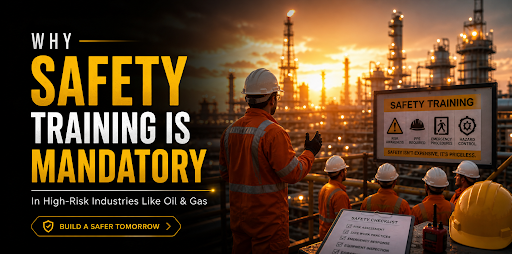
The high-risk industry, for instance, oil and gas, operates in an environment that could cause significant ramifications in case there is a slight mistake, from the destruction of equipment to endangering lives. In this situation, safety is not a suggestion but a necessity. One of the best methods of ensuring safety in the workplace is by implementing well-defined training programs, including “train the trainer” programs, in which seasoned employees can impart vital safety information to others.
The Nature of Risk in Oil & Gas Operations
There is always danger associated with oil and gas facilities. Workers have to work with highly flammable substances, pressurized equipment, confined spaces, and large machines regularly. Each type of facility is associated with different hazards that require a particular level of compliance with the established safety measures.
However, without the proper training, workers might not be able to comprehend the dangers involved and react appropriately in case of an emergency situation, thus putting themselves and the business at risk of substantial losses.
Why Safety Training Cannot Be Optional
Safety training serves a key function of ensuring safety in the workplace since it equips the workforce with the necessary knowledge, procedures, and skills for handling emergencies and risks on the job.
The following reasons highlight its importance:
- Accident Prevention: Training enables workers to recognize any imminent danger and prevent accidents from happening.
- Regulatory Compliance: Certain industries, such as oil and gas, have to be in compliance with safety regulations.
- Improved Response to Emergencies: Training helps in responding appropriately to hazards like fires, leaks, or machine breakdowns.
- Enhanced Workforce Confidence: Workers feel more confident in knowing how to respond to various risks.
Safety training is not a one-time activity; it requires continuous updates to match evolving technologies and operational practices.
The Cost of Neglecting Safety Training
The consequences of not giving adequate attention to safety training extend far beyond the initial incident. For industries such as oil and gas, one oversight on the part of the company could lead to not just accidents, but to other negative effects such as environmental hazards, legal ramifications, and damage to reputation.
Safety training would not only serve as a form of prevention from all these repercussions, but it would also ultimately help businesses maintain their continuity as well.
Building a Culture of Safety
While training may initially seem like an obligation, it goes beyond regulatory requirements in fostering a safety culture in the organization. Organizations that implement consistent training programs encourage their workforce to prioritize safety while carrying out any work tasks.
Characteristics of a safety culture include:
- Communication regarding risks and accidents
- Safety drill practice and refresher courses
- Leadership engagement in safety efforts
- Encouragement of employees to promptly report dangers
In such an atmosphere, negligence is minimized, and accountability is encouraged at all organizational levels.
The Role of Structured Training Programs
It is important to note that effective safety training is not confined to academic instruction alone but encompasses both theory and practice. Safety training programs designed for hazardous professions emphasize hands-on training.
Middle management and upper management personnel participate in specialized training programs such as “train-the-trainer,” which enables them to lead their respective teams in terms of safety training.
Structured safety training programs can be instrumental for organizations to:
- Uniformity in safety practices across teams
- Minimize reliance on outside trainers
- Development of internal expertise
- Efficient dissemination of knowledge
Addressing Industry-Specific Challenges
Each oil or gas operation presents a new set of challenges, whether it involves offshore drilling, pipeline, or refinery work. The safety training provided should therefore be customized to handle specific challenges.
Some of the key focus areas may include:
- Hazard identification and risk assessment
- Emergency response planning
- Safety when handling and maintaining equipment
- Fire and explosion prevention
- Environmental protection measures
Specific training will make sure that the workers are aware of the particular challenges they face, instead of being conversant with basic safety guidelines only.
The Human Factor in Workplace Safety
Although technology and equipment are essential aspects of safety management, people play a critical part in the process. The vast majority of workplace accidents and mishaps result from human errors, which often result from a lack of awareness, tiredness, and poor training.
This challenge can be handled through:
- Improved decision making
- Reinforcing the importance of following protocols
- Encouraging teamwork and communication
- Preventing employee complacency
Employees who are aware of the consequences of their actions will be much more careful at work.
Long-Term Benefits of Continuous Training
Apart from preventing workplace accidents, organizations that conduct continuous safety training benefit in many ways in the long term, such as:
- Increased efficiency in operations
- Decreased downtime and interruptions
- Reduced insurance and worker compensation expenses
- Improved reputation among peers in the same field
- Greater retention of skilled employees and job satisfaction
Continuous learning helps maintain up-to-date knowledge about safety protocols and tools, and thus makes work more efficient and productive.
Strengthening Safety Through Expertise
The success of any high-risk business relies heavily on a properly trained workforce. Maintaining uniform training standards for large workforces can prove to be difficult. In this case, it is vital to turn to experts who will provide professional assistance.
Using advanced learning frameworks and training programs will help ensure that the necessary knowledge is obtained, assimilated, and successfully implemented in practice.
Driving Safer Operations Forward
Industrial safety requires a continuous endeavor rather than a single step. The complexity of the activities undertaken by the industry requires proper training of individuals. Train-the-trainer programs assist in creating an environment where theory merges with practice to make safety an integral part of the work culture.
If you want to make your workforce more knowledgeable about different safety-related matters, you might want to turn to professional providers of industry-specific training courses. One such provider is Crewpetro, a company specializing in providing oil and gas safety training programs and other courses.
Nowadays, it is impossible to maintain a safe working environment without implementing oil and gas safety training, offshore safety courses, industrial safety certification, and workplace hazard management solutions into everyday operations is no longer optional; it is essential for sustainable and responsible growth.