Workplace Hazards in Drilling Operations

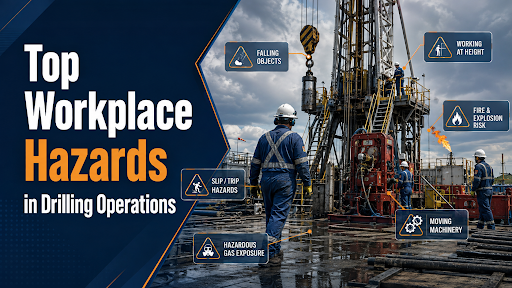
Top Workplace Hazards in Drilling Operations

Drilling operations involve complex equipment, high-pressure systems, and demanding working conditions. Whether carried out onshore or offshore, these operations expose personnel to several potential hazards that can lead to injuries, equipment damage, environmental incidents, and operational disruptions. Understanding these risks is essential for everyone working on or around a drilling rig. Proper safety training helps personnel recognise workplace hazards, follow established procedures and respond appropriately when unexpected situations arise.

From the rig floor to confined spaces and high-pressure well systems, drilling personnel must remain aware of changing conditions throughout every stage of an operation. A strong understanding of potential hazards can support safer decision-making and help create a more prepared workforce.

Well Control Incidents and High-Pressure Hazards

One of the most significant risks in drilling operations is the loss of well control. Drilling into subsurface formations can expose the well to unexpected pressure changes. If formation fluids enter the wellbore without being properly controlled, the situation can escalate into a kick or blowout.

Well control incidents can result in serious consequences, including fires, explosions, injuries and environmental damage. Personnel involved in drilling operations must understand pressure concepts, warning signs and the correct procedures for maintaining control of the well.

Relevant technical programmes such as IWCF Well Control and IADC WellSharp can help drilling professionals develop role-specific knowledge related to well control and emergency response.

Slips, Trips and Falls on the Rig

Drilling rigs are active workplaces with multiple levels, walkways, stairs, hoses, cables and equipment. These conditions can increase the risk of slips, trips and falls.

Common causes include:

  • Wet or oily surfaces
  • Poor housekeeping
  • Obstructed walkways
  • Uneven working areas
  • Improper use of ladders
  • Working at height without appropriate fall protection

Falls can occur during routine tasks, particularly when personnel are working on elevated structures or moving between different areas of the rig. Maintaining clean workspaces, following access procedures and using appropriate personal protective equipment can help reduce these risks.

Hazards associated with pits and falls are also included in programmes such as IADC RigPass, which covers a range of general safety and hazard-control topics relevant to drilling and workover personnel.

Heavy Equipment and Moving Machinery

Drilling operations depend on powerful machinery and equipment, including hoisting systems, rotary equipment, pumps and pipe-handling tools. Personnel working close to moving machinery face risks such as caught-between injuries, struck-by incidents and crushing accidents.

The rig floor can be particularly hazardous because several activities may take place simultaneously. Workers must understand equipment movement, maintain clear communication, and stay outside restricted areas when necessary.

Important precautions include:

  • Following designated operating procedures
  • Keeping clear of suspended loads
  • Using proper lockout and tagout procedures
  • Checking guards and safety devices before operating equipment
  • Communicating clearly during lifting and pipe-handling activities

Personnel must never assume that equipment is safe simply because it appears to be stationary. Stored energy and unexpected movement can create serious hazards if machinery is not properly isolated.

Hazardous Gases and H2S Exposure

Drilling personnel may encounter hazardous gases during oil and gas operations. Hydrogen sulphide (H2S) is one of the most serious concerns because it can be highly toxic. Exposure can cause severe health effects, particularly in poorly ventilated areas.

Workers may not always be able to rely on their sense of smell to identify hazardous gases. This makes gas detection equipment, emergency procedures and appropriate respiratory protection important elements of workplace preparedness.

IADC H2S Awareness is among the training programmes listed by Crew Petro for personnel who require greater awareness of H2S-related risks. Workers should understand evacuation procedures, alarm systems and the actions required if hazardous gas is detected.

Confined Spaces and Restricted Work Areas

Some drilling and workover activities may require personnel to enter tanks, pits or other restricted spaces. These areas can present multiple hazards, including:

  • Oxygen deficiency
  • Toxic gases
  • Flammable atmospheres
  • Limited entry and exit points
  • Difficult emergency rescue conditions

Confined-space work should never begin without proper hazard identification and controls. Atmospheric testing, permits, communication systems and emergency planning are important considerations before entry.

Programmes such as IADC Confined Space Awareness & Entry and IADC Permit-to-Work (PTW) can help personnel understand the procedures and responsibilities associated with higher-risk work environments.

Manual Handling and Material Movement

Drilling operations often involve handling tools, pipes and other heavy materials. Repetitive movements, improper lifting techniques and poorly coordinated manual tasks can result in strains, sprains and other musculoskeletal injuries.

Material-handling hazards are not limited to manual lifting. Workers may also be exposed to suspended loads and moving equipment during crane and lifting operations.

To reduce these risks, personnel should:

  • Assess the weight and stability of materials before handling them
  • Use mechanical lifting equipment when appropriate
  • Follow established lifting procedures
  • Maintain communication with team members
  • Stay clear of suspended loads
  • Wear suitable protective equipment

Courses such as IADC Crane Operation & Safety may provide relevant knowledge for personnel involved in lifting and material-handling activities.

Human Error and Communication Failures

Even advanced equipment cannot eliminate the risks created by poor communication, fatigue or incorrect decisions. Drilling operations require close coordination between different personnel, including drillers, supervisors, floor crew and service teams.

Miscommunication can lead to incorrect equipment operation, missed warning signs or unsafe actions. This is why clear procedures, teamwork and reporting systems are important throughout the operation.

A structured safety training approach can help workers better understand their responsibilities and recognise how individual actions affect the wider team. Behaviour-focused programmes can also encourage communication, observation and timely feedback on workplace practices.

Crew Petro offers IADC Behavior-Based Safety training, which focuses on people-oriented safety interventions, observations and feedback to support a stronger safety culture among drilling and workover personnel.

Preparing for Emergencies Before They Occur

Emergencies in drilling operations can develop quickly. Fires, gas releases, equipment failures and well control incidents require personnel to respond according to established procedures.

Effective emergency preparedness involves more than simply having equipment available. Workers must understand:

  • Emergency alarms and their meaning
  • Evacuation routes
  • Muster procedures
  • Emergency communication methods
  • Individual responsibilities during an incident
  • The importance of reporting hazards before they escalate

Regular preparation and practical learning can help personnel respond more effectively under pressure. Training programmes that combine technical knowledge with practical exercises and simulations can support a better understanding of real-world drilling situations.

Building Safer Drilling Workplaces Through Knowledge

Workplace hazards in drilling operations cannot always be eliminated, but many risks can be identified, assessed and controlled through the right procedures, equipment and workforce competence. From well control and hazardous gases to falls, machinery and confined spaces, every worker has a role in maintaining a safer working environment.

For individuals and organisations seeking industry-focused programmes, safety training should remain an important part of workforce development. With a range of courses covering well control, RigPass, H2S awareness, confined spaces, hazard identification and other drilling-related topics, Crew Petro is one of the best options to opt for when looking to strengthen knowledge and preparedness for safer drilling operations.
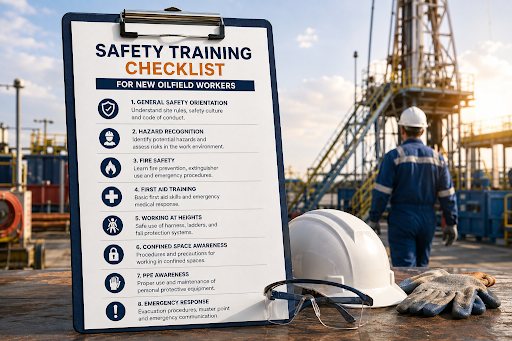
Safety Training Checklist

Safety Training Checklist for New Oilfield Workers

Working in an oilfield involves a wide range of operational risks. New workers may encounter heavy equipment, pressurised systems, hazardous materials, drilling operations and challenging working environments. Before entering the field, every worker needs a clear understanding of the procedures that help protect people, equipment and the surrounding environment. A structured safety training programme can help new oilfield workers understand workplace hazards, follow established procedures and respond appropriately when unexpected situations arise.

While specific requirements may differ depending on the job role and worksite, the following checklist covers important areas that should be addressed during the initial training and onboarding process.

Understanding the Worksite and Its Hazards

A new employee should never begin work without first becoming familiar with the worksite. Oil and gas operations can involve multiple teams working simultaneously, along with moving equipment and potentially hazardous processes.

Workers should understand:

  • The layout of the site
  • Restricted and authorised access areas
  • Emergency exits and assembly points
  • Locations of firefighting and first-aid equipment
  • Areas with specific hazards
  • Site-specific safety signs and warnings

Hazard awareness is particularly important for new workers who may not yet be familiar with the pace and complexity of oilfield operations. Employees should also be encouraged to report unsafe conditions and seek clarification whenever they are uncertain about a task.

Learning About Personal Protective Equipment

Personal Protective Equipment (PPE) is an essential part of oilfield work. However, simply providing workers with PPE is not enough. New employees must understand which equipment is required for their role and how to use it correctly.

Depending on the work environment, PPE may include:

  • Safety helmets
  • Protective footwear
  • Gloves suitable for the task
  • Safety glasses or goggles
  • Hearing protection
  • Flame-resistant clothing
  • Respiratory protection where required
  • Fall protection equipment for work at height

Workers should be trained to inspect their equipment before use and report damaged or unsuitable PPE. They should also understand that PPE works alongside other safety controls and does not eliminate the need to follow proper work procedures.

Identifying Common Oilfield Hazards

Oilfield workers can face many different hazards during routine operations. These may include slips and falls, moving machinery, suspended loads, high-pressure equipment, hazardous substances, and fire risks.

A basic checklist should include training on how to recognise:

  • Pinch points and moving equipment
  • Dropped-object hazards
  • Slippery or uneven surfaces
  • High-pressure systems
  • Flammable materials
  • Hazardous chemicals
  • Confined spaces
  • Electrical hazards
  • Noise and vibration risks

Crew Petro offers programmes related to IADC HAZARD Identification & Risk Assessment (HIRA), helping drilling and workover personnel understand the importance of recognising hazards and assessing risks before beginning work. Such knowledge can help workers make more informed decisions in operational environments.

Following Permit-to-Work Procedures

Certain tasks require formal authorisation before work can begin. A Permit-to-Work system helps ensure that appropriate precautions have been considered before potentially hazardous activities are performed.

New workers should understand when permits may be required and their responsibilities under the permit process. Training may cover activities involving confined spaces, hot work, electrical systems and other controlled operations.

An effective introduction should explain:

  • Why permits are required
  • Who is authorised to issue or approve them
  • What precautions must be followed
  • How long a permit remains valid
  • When work must stop and be reassessed

Workers should never assume that a permit removes all risks. They must continue following the conditions and precautions specified for the task. Crew Petro also provides IADC Permit-to-Work (PTW) training as part of its range of oil and gas training programmes.

Preparing for Emergency Situations

Emergency preparedness is a vital part of working in any high-risk industrial environment. New employees should know exactly what actions to take when an alarm sounds, or an emergency occurs.

Training should cover:

  • Emergency alarm signals
  • Evacuation routes
  • Muster or assembly points
  • Fire and smoke response procedures
  • Reporting an incident or emergency
  • Basic first-aid awareness
  • Communication procedures during emergencies

Depending on the work environment, workers may also require specialised training for offshore operations or specific emergency scenarios. Crew Petro’s training portfolio includes courses such as IADC Basic First Aid & CPR, providing personnel with knowledge relevant to responding during medical emergencies.

Understanding H2S and Other Hazardous Exposures

Hydrogen sulphide (H2S) is a significant hazard that may be present in some oil and gas operations. Workers who may encounter H2S should understand its risks and the site’s established response procedures.

This can include recognising warning signs, understanding monitoring systems and knowing what action to take if an alarm is activated. Workers should never rely solely on their senses to identify hazardous gases.

The checklist should also address other potential exposures, including chemicals, dust and vapours, depending on the specific worksite and job role. Crew Petro offers IADC H2S Awareness training for relevant drilling and workover personnel.

Safe Equipment and Machinery Practices

New oilfield workers should receive clear instructions before operating or working near equipment. This is particularly important when dealing with drilling machinery, lifting equipment, and other heavy systems.

Key areas to understand include:

  • Equipment operating procedures
  • Authorised personnel requirements
  • Lockout and isolation procedures
  • Safe distances from operating machinery
  • Communication with equipment operators
  • Inspection and reporting procedures

Workers should never operate equipment for which they have not been properly trained or authorised. They should also understand how lockout/tagout procedures help prevent equipment from being accidentally energised during maintenance or repair activities.

Building a Strong Safety Mindset

Technical knowledge is important, but workplace safety also depends on communication and behaviour. New workers should understand that reporting a hazard or stopping work when something appears unsafe is an important responsibility.

This is where safety training should go beyond simply explaining rules. Workers need to understand how their decisions and actions can affect the safety of the entire team.

A strong safety culture encourages employees to:

  • Communicate concerns clearly
  • Participate in toolbox talks
  • Follow procedures consistently
  • Learn from incidents and near misses
  • Look out for colleagues
  • Avoid taking unnecessary shortcuts

Crew Petro also offers IADC Behavior Based Safety training, which focuses on developing a positive approach towards teamwork, participation, communication and safe behaviour.

Learning the Basics of Well Control

For personnel involved in drilling and workover operations, understanding well control is an important area of professional knowledge. Loss of well control can create serious operational and safety risks, making proper knowledge and competency essential for relevant roles.

New personnel should understand the importance of following established well-control procedures and communicating effectively with the wider team. Depending on their role and responsibilities, workers may require further specialised training.

Crew Petro provides courses such as IWCF Well Control, IADC WellSharp and other drilling and well-control programmes to support professionals working in the oil and gas industry.

A Checklist for Safer Oilfield Careers

Starting a career in the oil and gas industry requires more than learning how to perform technical tasks. New workers must understand the risks around them, follow workplace procedures and develop responsible work habits from the beginning. A comprehensive safety training programme can provide an important foundation by covering hazard identification, PPE, emergency preparedness, permit systems and safe operational practices.

For professionals looking to develop relevant knowledge through specialised oil and gas courses, Crew Petro is one of the best options to opt for. With training programmes covering areas such as IADC RigPass, H2S awareness, confined space entry, first aid, hazard identification, well control and other industry-relevant subjects, Crew Petro supports oilfield personnel in building knowledge for safer and more responsible operations.

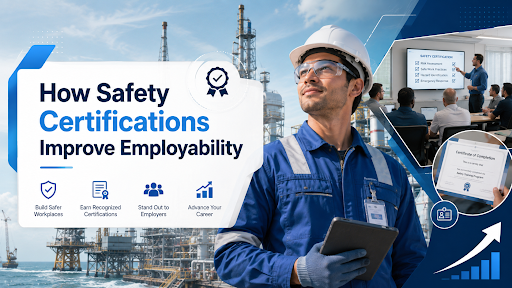
Safety Certifications Improve Employability

How Safety Certifications Improve Employability

In industries such as oil and gas, employers need professionals who understand both their job responsibilities and the importance of working safely. Technical knowledge is essential, but the ability to recognise hazards, follow established procedures and respond appropriately to workplace risks can also influence career opportunities. This is where safety training and recognised certifications can play an important role. They help individuals develop relevant workplace knowledge while demonstrating their commitment to safer and more responsible operations.

For job seekers entering the industry, certifications can provide a stronger foundation before starting a new role. For experienced professionals, they can help refresh existing knowledge and support continued professional development. In a competitive employment market, relevant qualifications may help candidates demonstrate that they have invested time in developing skills that are applicable to the industry’s working environment.

Certifications Demonstrate Workplace Readiness

Employers often look for candidates who can adapt to the demands of their workplace with an understanding of basic operational and safety requirements. A relevant certification can indicate that a candidate has completed structured learning in specific areas related to their role.

For example, Crew Petro offers a range of training programmes related to well control, drilling operations and workplace safety. Its IADC RigPass programme covers a variety of important topics, including general safety, hazard control methods, personal protective equipment, hazard communication and accident prevention.

Completing a recognised programme does not automatically guarantee employment. However, it can help candidates present evidence of relevant knowledge when applying for suitable positions.

Building Knowledge Beyond Technical Skills

Many jobs in the oil and gas industry require employees to understand complex work environments. Personnel may work around heavy equipment, drilling operations, hazardous materials, and other situations that require careful planning and responsible decision-making.

Safety-focused certifications can help individuals become familiar with subjects such as:

  • Hazard identification and risk awareness
  • Personal protective equipment
  • Permit-to-work procedures
  • Emergency response
  • Safe material handling
  • Hazard communication
  • Workplace conduct and responsibilities
  • Basic first aid and CPR
  • Behaviour-based safety principles

This knowledge can complement technical qualifications and provide candidates with a broader understanding of workplace expectations.

Greater Confidence in High-Risk Work Environments

Starting a career in a demanding industrial environment can be challenging, particularly for individuals with limited field experience. Structured learning can introduce participants to important concepts before they encounter them in a real workplace.

For instance, Crew Petro’s 30-day Roustabout & Floorman Training combines drilling knowledge, hands-on rig training, industry safety programmes and job-readiness elements. This type of learning can help participants understand how different aspects of rig operations are connected.

Training programmes that include practical instruction or simulator-based learning may also help candidates become more familiar with workplace scenarios. Crew Petro states that its training centres focus on small class sizes and simulator practice to provide candidates with greater individual attention and practical learning opportunities.

Recognised Credentials Can Strengthen a CV

A well-structured CV should clearly show an employer what a candidate knows and what qualifications they have completed. Relevant certifications can make it easier to demonstrate specialised training in areas that are important to a particular industry or role.

Depending on the course and the individual’s career goals, certifications may help highlight knowledge in areas such as:

  • Well control
  • General workplace safety
  • Hazard identification
  • Confined space awareness
  • H2S awareness
  • Crane operation and safety
  • Permit-to-work procedures
  • Behaviour-based safety
  • First aid and emergency preparedness

Crew Petro provides several programmes in these areas, including IADC WellSharp, IADC H2S Awareness, IADC Confined Space Awareness & Entry, IADC Basic First Aid & CPR, and IADC HAZARD Identification & Risk Assessment (HIRA).

When listed accurately on a CV, relevant certifications can give recruiters a clearer understanding of a candidate’s training background.

Meeting Industry Expectations

Certain roles and work environments may have specific training or certification requirements. Candidates who understand these expectations before applying for positions may be better prepared to pursue suitable career opportunities.

The IADC WellSharp programme offered by Crew Petro, for example, provides different levels of training for professionals with varying responsibilities. The programme covers well control knowledge and role-specific skills for personnel ranging from introductory-level workers to drilling professionals and supervisors.

Similarly, the IADC RigPass programme is designed as a standardised safety orientation programme for drilling and workover personnel. Such programmes can help workers develop awareness of fundamental safety responsibilities across different operating environments.

By gaining relevant qualifications, candidates can better understand the knowledge expected within their chosen area of work.

Developing a Stronger Safety Mindset

Employability is not based only on certificates. Employers also value professional behaviour, communication and the ability to work responsibly with others.

This is why safety training can offer benefits that extend beyond passing an assessment. Effective learning can encourage individuals to think carefully about hazards, follow procedures and understand how their actions may affect colleagues and the workplace.

Crew Petro’s IADC Behavior Based Safety programme focuses on building a positive safety culture through observation, communication, feedback and participation. These principles can be valuable because workplace safety depends not only on written procedures but also on how consistently people apply them during everyday operations.

A candidate who understands the importance of safety and teamwork may be better prepared to contribute responsibly within an organisation.

Supporting Career Growth Over Time

Safety-related learning is not useful only for people seeking their first job. As professionals progress in their careers, they may take on new responsibilities that require additional knowledge and specialised qualifications.

For example, an individual may begin with introductory industry knowledge and later pursue more advanced programmes based on their experience and job responsibilities. Well control training, supervisory training and specialised safety courses can support professional development at different career stages.

Continuous learning can also help professionals stay engaged with current industry practices and maintain the knowledge required for their roles. Rather than viewing certification as a one-time activity, professionals can consider it part of their broader career development.

Connecting Training With Employment Opportunities

One of the practical advantages of choosing an organisation involved in both training and recruitment is the understanding it can offer regarding industry requirements. Crew Petro operates as a training and recruitment company, with a focus on the oil and gas sector.

Candidates can therefore explore relevant learning opportunities while developing qualifications that align with specific areas of the industry. However, individuals should always review the requirements of their desired roles and choose courses based on their experience, career objectives and applicable eligibility criteria.

Before enrolling in any programme, it can be useful to consider:

  • The type of role you want to pursue
  • Your current qualifications and work experience
  • The eligibility requirements for the course
  • Whether the certification is relevant to your career path
  • The knowledge and practical skills covered in the programme

Taking a focused approach can help candidates select learning opportunities that genuinely support their professional goals.

Building a Safer and Stronger Career Path

Safety knowledge has an important place in industries where employees work in complex and potentially hazardous environments. Relevant certifications can help job seekers demonstrate workplace awareness, develop industry-specific knowledge, and prepare for the responsibilities associated with their chosen roles. While qualifications alone cannot guarantee employment, they can strengthen a candidate’s professional profile when combined with appropriate skills and experience.

For individuals looking to build relevant industry knowledge through recognised programmes, safety training can be a valuable part of long-term career development. With a range of oil and gas, well control and safety-related programmes, as well as experience in industry recruitment, Crew Petro is one of the best options to opt for when looking to develop practical knowledge and certifications that support employability.

Offshore Safety Standards

Offshore Safety Standards Every Worker Should Know

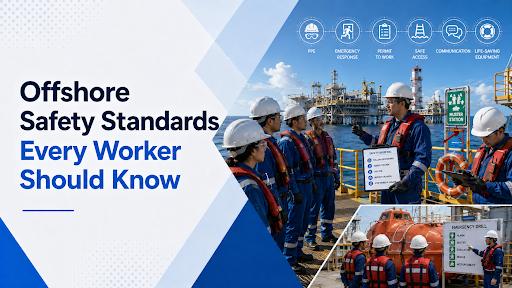
Working offshore involves unique challenges and risks. Oil rigs and offshore installations operate in demanding environments where workers may be exposed to heavy equipment, hazardous substances, high-pressure systems, changing weather conditions, and emergencies. Since offshore facilities are often located far from immediate medical assistance, every worker must understand and follow established safety procedures.

Proper safety training helps offshore personnel recognise workplace hazards, follow correct procedures and respond appropriately when unexpected situations occur. Safety is not the responsibility of one department or supervisor alone. Everyone on an offshore installation has a role in maintaining a safe working environment and protecting both people and the environment.

Understanding the Importance of Offshore Safety

Offshore operations involve many activities that require careful planning and strict operational control. Drilling, lifting operations, working at heights, handling chemicals and operating heavy machinery can all present potential risks.

A strong safety culture begins with awareness. Workers should understand the hazards associated with their specific roles and know the procedures designed to control those hazards. Following instructions, communicating clearly and reporting unsafe conditions are essential parts of day-to-day offshore work.

Safety standards also help ensure that workers know what actions to take before, during and after a task. Rushing through a job or ignoring established procedures can increase the likelihood of an incident.

Conduct a Risk Assessment Before Starting Work

One of the most important safety practices is identifying potential hazards before beginning any task. Workers should take time to understand the work involved, the equipment being used, and the possible risks in the surrounding area.

Before starting work, personnel should consider:

  • What hazards could be present?
  • Who could be affected by the work?
  • What control measures are required?
  • Is the correct equipment available?
  • Are all necessary permits and approvals in place?
  • Does everyone involved understand their responsibilities?

Hazard identification and risk assessment help workers make informed decisions before and during an operation. If conditions change or a new hazard appears, the work should be reassessed rather than continuing without proper controls.

Wear and Maintain the Required Personal Protective Equipment

Personal protective equipment (PPE) provides an important layer of protection in offshore environments. The specific equipment required may depend on the nature of the task and the work area.

Common PPE may include:

  • Safety helmets
  • Protective footwear
  • Gloves
  • Safety glasses or goggles
  • Hearing protection
  • Flame-resistant clothing
  • Fall-protection equipment
  • Respiratory protection, where required

Workers should inspect their PPE regularly and report damaged or unsuitable equipment. PPE should also be used correctly. Simply wearing protective equipment is not enough if it is poorly fitted or inappropriate for the task being performed.

Follow Permit-to-Work Procedures

Certain offshore activities require formal authorisation before work can begin. Permit-to-work systems help ensure that hazards have been assessed and that appropriate safety measures are in place.

Activities that may require specific permits can include hot work, confined-space entry, electrical work and other high-risk operations. Workers must understand the conditions attached to a permit and follow them throughout the task.

A permit is not simply a document to complete before starting work. It is part of a broader system for communication, planning and risk control. If the conditions of the job change, workers should notify the appropriate supervisor and reassess the work.

Know How to Respond to Emergencies

Offshore personnel must be prepared to respond to emergencies quickly and calmly. Fires, gas releases, equipment failures, and medical emergencies can require immediate action.

Every worker should be familiar with:

  • Emergency alarms and their meanings
  • Muster locations
  • Emergency escape routes
  • Lifesaving and evacuation procedures
  • Communication protocols
  • The location of emergency equipment

Regular drills are important because they help workers understand what to do under pressure. During an actual emergency, knowing the correct procedure can help reduce confusion and support an organised response.

Prevent Falls and Work Safely at Height

Working at height is a common activity in offshore operations and requires strict precautions. Falls can result in serious injuries, particularly when workers are operating near elevated platforms, ladders or open edges.

Before working at height, personnel should ensure that the appropriate access systems and fall-protection measures are in place. Equipment should be inspected before use, and workers should never use damaged ladders, harnesses or other safety equipment.

Good housekeeping also plays an important role. Slippery surfaces, loose objects and poorly maintained walkways can increase the risk of slips, trips and falls.

Understand Hazardous Materials and H₂S Risks

Offshore workers may encounter chemicals, drilling fluids and hazardous gases during their work. Understanding the properties and risks associated with these materials is essential.

Hydrogen sulphide (H₂S), for example, can be highly dangerous. Workers operating in areas where hazardous gases may be present need to understand detection methods, emergency procedures and the appropriate protective measures.

Hazard communication should be taken seriously. Workers must know how to access relevant information about the materials they handle and understand the precautions required for storage, use and disposal.

Training programmes such as IADC H2S Awareness and IADC HAZARD Identification & Risk Assessment (HIRA) can help personnel develop knowledge of specific workplace hazards and appropriate control measures.

Practice Safe Equipment and Machinery Operation

Heavy machinery and drilling equipment can create significant risks when operated incorrectly. Only authorised and properly qualified personnel should operate equipment within their assigned responsibilities.

Workers should always:

  • Inspect equipment before use
  • Follow established operating procedures
  • Keep clear of moving machinery
  • Avoid loose clothing around rotating equipment
  • Use proper communication during lifting operations
  • Report equipment faults immediately

Lockout and isolation procedures are also essential when equipment is being repaired or maintained. Energy sources must be properly controlled before maintenance work begins to prevent unexpected movement or activation.

Develop a Strong Safety Mindset

Offshore safety depends heavily on the actions and decisions of individual workers. A strong safety culture encourages people to speak up when they identify unsafe conditions and to communicate openly with their teams.

This is where safety training plays an important role in developing awareness and responsible workplace behaviour. Workers should understand that stopping work when a serious hazard is identified can be the correct decision.

Behaviour-based approaches to safety also focus on observation, communication and constructive feedback. By learning from routine activities and discussing potential risks, teams can continuously improve their approach to workplace safety.

Crew Petro offers programmes such as IADC Behavior Based Safety, which focus on building a safety culture through teamwork, communication and positive safety practices.

Maintain Clear Communication Across the Team

Offshore operations often involve multiple teams working together in a limited and complex environment. Poor communication can lead to misunderstandings and increase operational risks.

Workers should communicate clearly during shift handovers, safety meetings and task planning. Important information about equipment conditions, ongoing work and potential hazards should be shared with the relevant personnel.

When instructions are unclear, workers should ask for clarification rather than making assumptions. Clear communication is particularly important during high-risk activities, including lifting operations, drilling and emergencies.

Keep Learning and Updating Your Knowledge

Safety requirements and operational practices can evolve. Regular learning helps workers remain aware of current procedures and strengthens their ability to respond to workplace challenges.

Depending on their roles and responsibilities, offshore professionals may benefit from specialised programmes such as IADC RigPass, IWCF Well Control, confined-space training, basic first aid and CPR, and other industry-focused courses.

Crew Petro provides training and recruitment services for the oil and gas industry, with training centres and operations across multiple locations. Its training approach includes industry-focused instruction and practical learning opportunities to help candidates understand how their knowledge can be applied in real working environments.

Building a Safer Future Offshore

Offshore safety is built through consistent actions, proper procedures and a shared commitment from every member of the workforce. Understanding hazards, wearing appropriate protective equipment, following permit procedures and responding correctly to emergencies can make a significant difference in reducing workplace risks.

For professionals looking to strengthen their knowledge through recognised industry programmes, safety training should be viewed as an essential part of professional development. With a range of oil and gas-focused training programmes, experienced instructors and practical learning opportunities, Crew Petro is the best option to opt for when building the knowledge and skills required for safer offshore operations.

Safety Training Programs Every Oil & Gas Professiona

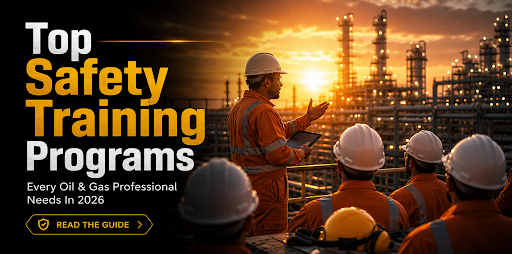
Top Safety Training Programs Every Oil & Gas Professional Needs in 2026

Despite the many advances in oil and gas exploration, there remain some of the highest risks out there for professionals in the field. Be it offshore drilling operations or onshore facilities, employees need to learn how to handle risks beyond experience; learning and being prepared are crucial. Therefore, it becomes evident that safety training in oil and gas is important for everyone working in this industry, especially with the upcoming 2026 year on the horizon, where changes will take place because of evolving technology, new regulations, and other factors.

Learning about the most appropriate training programs may assist professionals in ensuring compliance, reducing hazards in the workplace, and improving efficiency in operations.

Why Safety Training Is More Critical Than Ever

Oil and gas exploration requires special skills, because any mistake at the right time will bring significant consequences. Moreover, with all the advancements in automation, surveillance, and other digital equipment and technologies in oil fields and refineries, professionals need to be knowledgeable about modern ways of managing risks at workplaces.

Regulatory bodies around the world are also increasing their safety standards, making certifications and continuous learning compulsory. More and more organizations are spending on systematic training courses that will prepare their employees not only for day-to-day tasks but also for emergencies.

Core Safety Training Programs to Focus on in 2026

1. Basic Offshore Safety Induction and Emergency Training (BOSIET)

BOSIET is a must for all professionals working at sea. This introductory course helps trainees develop skills for responding to emergencies like fires, crashes, and evacuations.

Main topics include:

  • Sea survival techniques
  • Firefighting basics
  • Emergency first aid
  • Helicopter safety and escape drills

2. Advanced Firefighting Training

The fire risks associated with oil and gas operations cannot be ignored because of the flammable substances and high pressures involved in these industries. Advanced firefighting courses cover more than just basic firefighting skills; they focus on real-world problem-solving.

Trainees learn about:

  • Fire behavior and prevention methods
  • Using specialized firefighting equipment
  • Coordination during emergencies
  • Risk management in high-hazardous areas

3. H2S (Hydrogen Sulfide) Safety Training

This is probably the most dangerous gas associated with the oil and gas industry. Even minor exposures pose dangers, which makes the training vital.

Topics covered in the course include:

  • Detection and monitoring methods
  • Using personal protective equipment
  • Emergency response strategies
  • Evacuation plans

4. Confined Space Entry Training

In many industries’ jobs, people find themselves working in confined spaces, like tanks, pipelines, or storage facilities. They expose themselves to dangers like a lack of oxygen, toxic substances, or difficulty moving around.

Main subjects are:

  • Identifying hazards
  • Entering and exiting safety procedures
  • Rescue procedures
  • Utilizing breathing equipment

Mid-Level and Specialized Training Programs

With increasing experience, employees will have higher responsibilities. Thus, their training goes beyond just compliance and is focused on developing their risk management skills.

5. Process Safety Management (PSM)

In terms of incident prevention during hazardous processes and chemicals, the PSM approach is an essential element of the solution to this problem.

Subjects covered are:

  • Hazard and risk analyses
  • Monitoring safety performance
  • Investigating incidents
  • Compliance with international standards

6. Emergency Response and Crisis Management

This course equips professionals to manage massive emergencies, such as blowouts, spills, and natural disasters.

Skills learned:

  • Communication during crises
  • Commanding incident command systems
  • Coordinating efforts with other organizations
  • Real-time decision-making under pressure

7. Permit to Work (PTW) Systems Training

The PTW system helps conduct dangerous operations in a safe and methodical manner.

Program covers:

  • Work authorization processes
  • Control of risks
  • Documenting and compliance
  • Inter-team coordination

The Role of Technology in Modern Safety Training

By 2026, any mode of conducting training programs will be possible, excluding traditional face-to-face and hands-on training methods. The advent of digital technology has revolutionized training methods.

Emerging trends include:

  • Virtual reality (VR) simulations to simulate practical situations
  • E-learning platforms to provide accessibility to different modules
  • Artificial intelligence-based assessments to measure skill levels
  • Remote training solutions for offshore teams

These new techniques enhance the training experience and offer professionals a platform to learn by practicing in simulated environments with high-risk situations.

Understanding Human Factors in Workplace Safety

Apart from technical expertise and processes, human factors have proven to be key contributors in avoiding any mishaps. Some of the factors not always considered include fatigue, stress, lack of communication, and overconfidence. These types of factors are now being incorporated into training programs in 2026, where oil and gas industry professionals are trained on how to identify behavioral risks and make sound decisions.

This will enable professionals to prevent any errors that may arise due to such situations.

Building a Culture of Safety on Site

Training alone is not sufficient. Organizations should foster an environment where safety is part of daily activities.

This includes:

  • Engagement in discussions about risk
  • Conducting safety drills regularly
  • Accountability in every department
  • Continuous updating of training programs

The more companies promote safety as an individual responsibility, the better results they can achieve from training programs.

A Smarter Approach to Safety Preparedness in 2026

With the constant evolution in the industry, one needs to stay ahead of the game by developing the necessary skills and knowledge. Therefore, the need for safety training cannot be denied because this type of training is crucial for operational efficiency and workplace safety.

Those individuals who wish to gain more expertise should focus on the most relevant and credible options available. Programs such as those offered by Crewpetro provide a range of training courses suited to today’s industry requirements, making them a reliable option for professionals aiming to stay compliant and prepared.

Moreover, training and certification in fields like oil and gas safety courses, offshore safety certification, industrial safety training, HSE training courses, and process safety management certification can help in advancing their careers as well as creating a safe working environment.

By keeping themselves up to date and enhancing their skills, the oil and gas industry professionals can confidently face the challenges of 2026 and beyond.

Safety Training is Mandatory

Why Safety Training is Mandatory in High-Risk Industries Like Oil & Gas

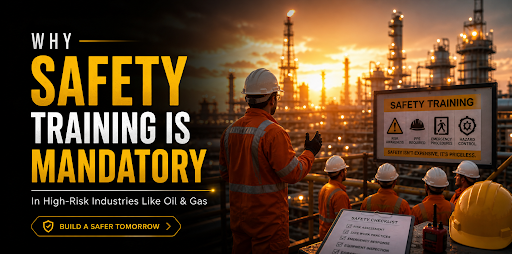
The high-risk industry, for instance, oil and gas, operates in an environment that could cause significant ramifications in case there is a slight mistake, from the destruction of equipment to endangering lives. In this situation, safety is not a suggestion but a necessity. One of the best methods of ensuring safety in the workplace is by implementing well-defined training programs, including “train the trainer” programs, in which seasoned employees can impart vital safety information to others.

The Nature of Risk in Oil & Gas Operations

There is always danger associated with oil and gas facilities. Workers have to work with highly flammable substances, pressurized equipment, confined spaces, and large machines regularly. Each type of facility is associated with different hazards that require a particular level of compliance with the established safety measures.

However, without the proper training, workers might not be able to comprehend the dangers involved and react appropriately in case of an emergency situation, thus putting themselves and the business at risk of substantial losses.

Why Safety Training Cannot Be Optional

Safety training serves a key function of ensuring safety in the workplace since it equips the workforce with the necessary knowledge, procedures, and skills for handling emergencies and risks on the job.

The following reasons highlight its importance:

  • Accident Prevention: Training enables workers to recognize any imminent danger and prevent accidents from happening.
  • Regulatory Compliance: Certain industries, such as oil and gas, have to be in compliance with safety regulations.
  • Improved Response to Emergencies: Training helps in responding appropriately to hazards like fires, leaks, or machine breakdowns.
  • Enhanced Workforce Confidence: Workers feel more confident in knowing how to respond to various risks.

Safety training is not a one-time activity; it requires continuous updates to match evolving technologies and operational practices.

The Cost of Neglecting Safety Training

The consequences of not giving adequate attention to safety training extend far beyond the initial incident. For industries such as oil and gas, one oversight on the part of the company could lead to not just accidents, but to other negative effects such as environmental hazards, legal ramifications, and damage to reputation.

Safety training would not only serve as a form of prevention from all these repercussions, but it would also ultimately help businesses maintain their continuity as well.

Building a Culture of Safety

While training may initially seem like an obligation, it goes beyond regulatory requirements in fostering a safety culture in the organization. Organizations that implement consistent training programs encourage their workforce to prioritize safety while carrying out any work tasks.

Characteristics of a safety culture include:

  • Communication regarding risks and accidents
  • Safety drill practice and refresher courses
  • Leadership engagement in safety efforts
  • Encouragement of employees to promptly report dangers

In such an atmosphere, negligence is minimized, and accountability is encouraged at all organizational levels.

The Role of Structured Training Programs

It is important to note that effective safety training is not confined to academic instruction alone but encompasses both theory and practice. Safety training programs designed for hazardous professions emphasize hands-on training.

Middle management and upper management personnel participate in specialized training programs such as “train-the-trainer,” which enables them to lead their respective teams in terms of safety training.

Structured safety training programs can be instrumental for organizations to:

  • Uniformity in safety practices across teams
  • Minimize reliance on outside trainers
  • Development of internal expertise
  • Efficient dissemination of knowledge

Addressing Industry-Specific Challenges

Each oil or gas operation presents a new set of challenges, whether it involves offshore drilling, pipeline, or refinery work. The safety training provided should therefore be customized to handle specific challenges.

Some of the key focus areas may include:

  • Hazard identification and risk assessment
  • Emergency response planning 
  • Safety when handling and maintaining equipment
  • Fire and explosion prevention
  • Environmental protection measures

Specific training will make sure that the workers are aware of the particular challenges they face, instead of being conversant with basic safety guidelines only.

The Human Factor in Workplace Safety

Although technology and equipment are essential aspects of safety management, people play a critical part in the process. The vast majority of workplace accidents and mishaps result from human errors, which often result from a lack of awareness, tiredness, and poor training.

This challenge can be handled through:

  • Improved decision making
  • Reinforcing the importance of following protocols
  • Encouraging teamwork and communication
  • Preventing employee complacency

Employees who are aware of the consequences of their actions will be much more careful at work.

Long-Term Benefits of Continuous Training

Apart from preventing workplace accidents, organizations that conduct continuous safety training benefit in many ways in the long term, such as:

  • Increased efficiency in operations
  • Decreased downtime and interruptions
  • Reduced insurance and worker compensation expenses
  • Improved reputation among peers in the same field
  • Greater retention of skilled employees and job satisfaction

Continuous learning helps maintain up-to-date knowledge about safety protocols and tools, and thus makes work more efficient and productive.

Strengthening Safety Through Expertise

The success of any high-risk business relies heavily on a properly trained workforce. Maintaining uniform training standards for large workforces can prove to be difficult. In this case, it is vital to turn to experts who will provide professional assistance.

Using advanced learning frameworks and training programs will help ensure that the necessary knowledge is obtained, assimilated, and successfully implemented in practice.

Driving Safer Operations Forward

Industrial safety requires a continuous endeavor rather than a single step. The complexity of the activities undertaken by the industry requires proper training of individuals. Train-the-trainer programs assist in creating an environment where theory merges with practice to make safety an integral part of the work culture.

If you want to make your workforce more knowledgeable about different safety-related matters, you might want to turn to professional providers of industry-specific training courses. One such provider is Crewpetro, a company specializing in providing oil and gas safety training programs and other courses.

Nowadays, it is impossible to maintain a safe working environment without implementing oil and gas safety training, offshore safety courses, industrial safety certification, and workplace hazard management solutions into everyday operations is no longer optional; it is essential for sustainable and responsible growth.