
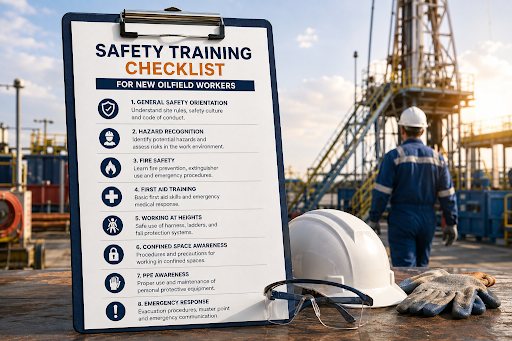
Working in an oilfield involves a wide range of operational risks. New workers may encounter heavy equipment, pressurised systems, hazardous materials, drilling operations and challenging working environments. Before entering the field, every worker needs a clear understanding of the procedures that help protect people, equipment and the surrounding environment. A structured safety training programme can help new oilfield workers understand workplace hazards, follow established procedures and respond appropriately when unexpected situations arise.
While specific requirements may differ depending on the job role and worksite, the following checklist covers important areas that should be addressed during the initial training and onboarding process.
Understanding the Worksite and Its Hazards
A new employee should never begin work without first becoming familiar with the worksite. Oil and gas operations can involve multiple teams working simultaneously, along with moving equipment and potentially hazardous processes.
Workers should understand:
- The layout of the site
- Restricted and authorised access areas
- Emergency exits and assembly points
- Locations of firefighting and first-aid equipment
- Areas with specific hazards
- Site-specific safety signs and warnings
Hazard awareness is particularly important for new workers who may not yet be familiar with the pace and complexity of oilfield operations. Employees should also be encouraged to report unsafe conditions and seek clarification whenever they are uncertain about a task.
Learning About Personal Protective Equipment
Personal Protective Equipment (PPE) is an essential part of oilfield work. However, simply providing workers with PPE is not enough. New employees must understand which equipment is required for their role and how to use it correctly.
Depending on the work environment, PPE may include:
- Safety helmets
- Protective footwear
- Gloves suitable for the task
- Safety glasses or goggles
- Hearing protection
- Flame-resistant clothing
- Respiratory protection where required
- Fall protection equipment for work at height
Workers should be trained to inspect their equipment before use and report damaged or unsuitable PPE. They should also understand that PPE works alongside other safety controls and does not eliminate the need to follow proper work procedures.
Identifying Common Oilfield Hazards
Oilfield workers can face many different hazards during routine operations. These may include slips and falls, moving machinery, suspended loads, high-pressure equipment, hazardous substances, and fire risks.
A basic checklist should include training on how to recognise:
- Pinch points and moving equipment
- Dropped-object hazards
- Slippery or uneven surfaces
- High-pressure systems
- Flammable materials
- Hazardous chemicals
- Confined spaces
- Electrical hazards
- Noise and vibration risks
Crew Petro offers programmes related to IADC HAZARD Identification & Risk Assessment (HIRA), helping drilling and workover personnel understand the importance of recognising hazards and assessing risks before beginning work. Such knowledge can help workers make more informed decisions in operational environments.
Following Permit-to-Work Procedures
Certain tasks require formal authorisation before work can begin. A Permit-to-Work system helps ensure that appropriate precautions have been considered before potentially hazardous activities are performed.
New workers should understand when permits may be required and their responsibilities under the permit process. Training may cover activities involving confined spaces, hot work, electrical systems and other controlled operations.
An effective introduction should explain:
- Why permits are required
- Who is authorised to issue or approve them
- What precautions must be followed
- How long a permit remains valid
- When work must stop and be reassessed
Workers should never assume that a permit removes all risks. They must continue following the conditions and precautions specified for the task. Crew Petro also provides IADC Permit-to-Work (PTW) training as part of its range of oil and gas training programmes.
Preparing for Emergency Situations
Emergency preparedness is a vital part of working in any high-risk industrial environment. New employees should know exactly what actions to take when an alarm sounds, or an emergency occurs.
Training should cover:
- Emergency alarm signals
- Evacuation routes
- Muster or assembly points
- Fire and smoke response procedures
- Reporting an incident or emergency
- Basic first-aid awareness
- Communication procedures during emergencies
Depending on the work environment, workers may also require specialised training for offshore operations or specific emergency scenarios. Crew Petro’s training portfolio includes courses such as IADC Basic First Aid & CPR, providing personnel with knowledge relevant to responding during medical emergencies.
Understanding H2S and Other Hazardous Exposures
Hydrogen sulphide (H2S) is a significant hazard that may be present in some oil and gas operations. Workers who may encounter H2S should understand its risks and the site’s established response procedures.
This can include recognising warning signs, understanding monitoring systems and knowing what action to take if an alarm is activated. Workers should never rely solely on their senses to identify hazardous gases.
The checklist should also address other potential exposures, including chemicals, dust and vapours, depending on the specific worksite and job role. Crew Petro offers IADC H2S Awareness training for relevant drilling and workover personnel.
Safe Equipment and Machinery Practices
New oilfield workers should receive clear instructions before operating or working near equipment. This is particularly important when dealing with drilling machinery, lifting equipment, and other heavy systems.
Key areas to understand include:
- Equipment operating procedures
- Authorised personnel requirements
- Lockout and isolation procedures
- Safe distances from operating machinery
- Communication with equipment operators
- Inspection and reporting procedures
Workers should never operate equipment for which they have not been properly trained or authorised. They should also understand how lockout/tagout procedures help prevent equipment from being accidentally energised during maintenance or repair activities.
Building a Strong Safety Mindset
Technical knowledge is important, but workplace safety also depends on communication and behaviour. New workers should understand that reporting a hazard or stopping work when something appears unsafe is an important responsibility.
This is where safety training should go beyond simply explaining rules. Workers need to understand how their decisions and actions can affect the safety of the entire team.
A strong safety culture encourages employees to:
- Communicate concerns clearly
- Participate in toolbox talks
- Follow procedures consistently
- Learn from incidents and near misses
- Look out for colleagues
- Avoid taking unnecessary shortcuts
Crew Petro also offers IADC Behavior Based Safety training, which focuses on developing a positive approach towards teamwork, participation, communication and safe behaviour.
Learning the Basics of Well Control
For personnel involved in drilling and workover operations, understanding well control is an important area of professional knowledge. Loss of well control can create serious operational and safety risks, making proper knowledge and competency essential for relevant roles.
New personnel should understand the importance of following established well-control procedures and communicating effectively with the wider team. Depending on their role and responsibilities, workers may require further specialised training.
Crew Petro provides courses such as IWCF Well Control, IADC WellSharp and other drilling and well-control programmes to support professionals working in the oil and gas industry.
A Checklist for Safer Oilfield Careers
Starting a career in the oil and gas industry requires more than learning how to perform technical tasks. New workers must understand the risks around them, follow workplace procedures and develop responsible work habits from the beginning. A comprehensive safety training programme can provide an important foundation by covering hazard identification, PPE, emergency preparedness, permit systems and safe operational practices.
For professionals looking to develop relevant knowledge through specialised oil and gas courses, Crew Petro is one of the best options to opt for. With training programmes covering areas such as IADC RigPass, H2S awareness, confined space entry, first aid, hazard identification, well control and other industry-relevant subjects, Crew Petro supports oilfield personnel in building knowledge for safer and more responsible operations.