Train the Trainer vs Technical Instructor Training

Train the Trainer vs Technical Instructor Training: Differences Explained

Training is significant in any industry that demands utmost importance be placed on safety, precision, and effectiveness in operations. It can be an oil and gas company, maritime operation, offshore operation, or even an industrial company. All of these companies require qualified trainers who will be responsible for transferring information from one individual to another. However, in most cases, many people tend to assume that train-the-trainer programs and technical instructor training achieve the same objectives.

Although both training techniques emphasize enhancing learning results, their goals, processes, and implementation techniques differ greatly. Awareness of such distinctions is important for choosing the proper training route that would result in the development of long-term competencies.

Understanding the Purpose of Trainer Development

The modern world of work is constantly changing, and today industries need trainers who go beyond the mere explanation of processes. Modern trainers need to be competent in conveying messages, engaging students, assessing performances, and adapting to the learning styles of the audience.

In this regard, structured trainer development programs play a vital role in the training process because the competence of a trainer in conveying a message may influence the safety, compliance, and productivity of the organization.

Train-the-trainer programs have the primary goal of improving the communication skills of a professional. These types of programs are mostly aimed at teaching professionals to be competent in training others, irrespective of the technical topic of the training.

Unlike that of technical instructors, training for technical instruction is more concerned with the presentation of technical information in a systematic way.

While there may be some similarities between the two kinds of training, their respective objectives are distinct from each other.

What Is Trainer Training?

Train-the-Trainer training programs are intended for people who have already developed their technical or operational skills but require help to teach others.

These courses usually emphasize the following elements:

  • Presentation and facilitation skills
  • Principles of adult learning
  • Classroom management
  • Evaluation approaches
  • Communication techniques
  • Providing practical and theoretical classes
  • Developing lesson plans

The primary aim is to develop professional experts into skilled trainers who will be able to impart knowledge easily.

For instance, an experienced offshore manager might know all about safety procedures but would have difficulty explaining them to learners. Train the Trainer training addresses this concern.

Oil and gas, maritime, aviation, construction, and heavy engineering industries, among others, are turning to train-the-trainer schemes as mere technical proficiency is not sufficient for workforce training anymore.

What Is Technical Instructor Training?

The training of technical instructors is more focused and specific. It targets professionals who need to impart information about technical subjects that necessitate high adherence to operational requirements and guidelines.

Some components that such training might involve include:

  • Technical subject delivery
  • Operational equipment demonstration
  • Use of simulation
  • Competency-based assessment
  • Compliance with industry regulations
  • Safety in operation
  • Scenario-based teaching method

Such training is common in areas where any error in operation would have serious consequences for safety and finances.

For example, training of instructors in activities like drilling operations, crane operations, process safety, and marine engineering requires advanced training that takes into account both technical proficiency and the ability to assess operationally.

Technical instructor training is different from general trainer development training because it focuses more on technical correctness and proficiency.

Key Differences Between the Two

While both types of training have their own benefits in terms of learning and workforce development, there are many differences between them.

1. Core Objective

The purpose of trainer development is to increase the quality of teaching and engagement of learners.

Technical instruction aims at transferring complicated technical information in a safe way.

2. Target Audience

The train-the-trainer program is appropriate for the following candidates:

  • Team Leaders
  • Supervisors
  • Safety Officers
  • HR Trainers
  • Subject Matter Experts

The technical instructor program targets:

  • Technical Specialists
  • Equipment Trainers
  • Compliance Safety Trainers
  • Offshore Trainers
  • Engineering Trainers

3. Training Style

Instruction in the general trainer program focuses on communication, facilitation, and working with learners.

In technical instruction, the emphasis is on practical training, simulations, demonstrations, and competency assessment.

4. Industry Requirements

Technical instruction is connected to industry standards and regulations.

The general trainer program is wider than the technical one and can be used in various industries.

Why Both Training Types Matter Today

With the increasing need to ensure efficiency, safety, and compliance with laws and regulations in organizational operations, the demand for competent trainers continues to rise.

It is now understood that even people with extensive experience cannot be expected to perform well without any instructional training prior to becoming teachers.

An effective train-the-trainer course not only helps companies develop the ability to conduct their own training but also enhances employee engagement and retention.

Technical training of instructors guarantees efficient instruction of procedures and processes in organizations, particularly in cases where mistakes can be dangerous.

Companies that ensure both instructional and technical proficiency tend to have:

  • Improved workforce competency
  • Better safety performance
  • Reduced operational errors
  • More effective onboarding
  • Stronger compliance management
  • Higher learner confidence

In an industry where technology and regulation are always changing, instructor development has become crucial rather than being optional.

Which Training Option Is More Suitable?

The right approach depends on the professional position and objectives of the organization.

In case the emphasis lies on enhancing communication skills, training skills, and classroom performance, then trainer development programs are the most suitable choice.

But if the job entails imparting knowledge about specific operational procedures or equipment to the trainees, then technical instructor training should be adopted.

In many instances, it can prove beneficial to employ both strategies in combination. This means that the instructor will have high levels of technical competence combined with excellent delivery skills to provide an effective learning environment.

An organization stands a greater chance of getting better results from its training if its trainers have technical and professional abilities.

Building Stronger Trainers for Modern Industries

As industries focus on becoming excellent in their operations and providing safe work environments for their employees, the role of professional trainers becomes more important. Technical instruction, as well as trainer training, plays a significant role in helping to achieve safer and more competent work environments.

Those who are looking for ways to improve their instruction abilities would find great use of structured train-the-trainer courses, together with specific technical training sessions. Some organizations, such as Crewpetrohave made important contributions in this area through the provision of industry-specific learning solutions that cover issues such as offshore safety training, competence management, industrial workforce development, technical training programs, and professional trainer certification. The importance of workforce capabilities within industries cannot be underestimated.

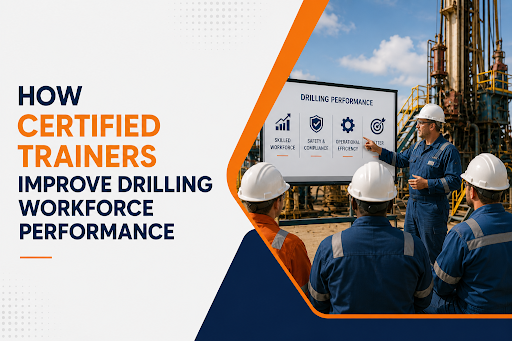
Certified Trainers Improve Drilling Workforce Performance

How Certified Trainers Improve Drilling Workforce Performance

The oil and Gas Industry is an industry that requires one to operate under some of the toughest conditions out there. In any drilling process, efficiency of the labor force, competency, and even safety are crucial. Any little slip in judgment may cost you time, money, and even compromise safety on your site. That is why today there is more effort being made to ensure that there is learning through structured learning programs and even a train-the-trainer approach among drilling sites.

Certified trainers perform a critical function in assisting drilling crews to remain up-to-date on industry best practices, procedures, and technological advancements. In addition to technical proficiency, such training instills a culture of consistency and accountability within the field.

Why Training Standards Matter in Drilling Operations

The drilling operation entails many levels of accountability, ranging from operations and machinery handling to emergency and compliance management. Drillers may work under high-pressure situations and in harsh conditions, as well as near dangerous machinery. If workers do not receive adequate training, there is potential for decreased efficiency and increased risk of injury.

The roles of certified trainers include providing a standardized learning process by making sure that employees have an understanding of:

  • Operational procedures
  • Methods for equipment operation
  • Procedures to identify hazards
  • Response plans for emergencies
  • Communications plans

This structured approach creates better coordination between departments and reduces confusion during critical operations.

The Value of Industry-Certified Trainers

The sole factor of experience can no longer suffice for modern drilling operations. Modern trainers should therefore be able to integrate technical skills with training skills. Certified trainers undergo training not only in operational skills but also in transferring these skills to drilling personnel.

Their training methods often include:

Practical Demonstrations

Training that involves practical demonstrations of procedures and actual drilling activities can enable employees to learn quickly by applying their knowledge in practice.

Performance Monitoring

Trained instructors frequently assess employee performance through testing, practice, and other forms of evaluation. Through this process, the trainer can establish areas where workers lack proficiency before the operation begins.

Updated Industry Knowledge

New developments continue to happen within the industry, such as technology advancements, changes in safety and operations policies. Therefore, instructors make sure workers are always up to date on industry trends.

Reducing Operational Risks Through Better Learning

The greatest benefit of professional training of the workforce lies in the prevention of hazards. In most cases, accidents happen because of human mistakes, ignorance, or poor practice.

Trained instructors will assist in reducing such risks by enabling employees to:

  • Respond during emergencies
  • Comply with standard operating procedures
  • Operate equipment in a safe manner
  • Recognize warning signs before failures occur
  • Communicate properly during high-pressure situations

With consistent direction and encouragement from their superiors, workers will gain confidence and readiness to handle complicated drilling procedures.

Building Strong Leadership Within Teams

Training sessions are not meant exclusively for recruits. The supervisors, team leaders, and even the most senior technical staff will also find advanced training beneficial.

A well-designed train-the-trainer process facilitates the transformation of experienced professionals into internal mentors. In this way, an efficient knowledge-sharing culture will be fostered within the organization.

The internal trainers know the ins and outs of their workforce better than anyone else, which makes the process easier. As a result, the following will improve:

  • Team communication
  • Leadership development
  • Adaptability of the workforce
  • Operational efficiency
  • Confidence of the employees

By investing in internal training leadership, the company will experience improved workforce retention and teamwork among drilling divisions.

The Link Between Training and Productivity

Drilling activities require precise, fast, and well-coordinated procedures for them to be effective. Any delay brought about by human error will have an impact on time and money.

Trained professionals can assist in increasing efficiency through accuracy and efficient execution of work. With adequately trained employees, organizations can expect them to:

  • Minimize time lost due to machinery problems
  • Facilitate smooth coordination within the operation
  • Properly follow procedures without needing constant supervision
  • Properly operate advanced drilling systems
  • Meet set quality standards

As a result, companies can achieve smoother drilling operations while reducing avoidable disruptions.

Supporting Compliance and Safety Expectations

The petroleum industry is subject to a high level of regulation, with a lot of emphasis on safety, environment, and operations. Firms need to ensure that their staff are aware of the various compliance issues that come into play during drilling processes.

Trained individuals assist organizations in adhering to the set standards by providing continued training and conducting practice exercises for the firm’s staff members. Trainers also ensure that the staff remains abreast of changes in regulatory laws within the industry.

Training in such cases may cover the following areas:

  • Workplace safety practices
  • Environmental protection measures
  • Well control procedures
  • Incident prevention techniques
  • Equipment inspection protocols

Training assists organizations in ensuring safety and operational effectiveness within the organization.

Technology Is Changing Workforce Training

With current developments, today’s drilling process makes use of advanced equipment and techniques, such as automatic systems, electronic means, and simulation software for learning. Modern training for the workforce has become interactive and technology-based.

Today’s certified trainers often use:

  • Virtual oil well drilling simulations
  • Digital safety training programs
  • Competency-based tracking programs
  • Interactive assessments
  • Scenario-based learning activities

These enhance the efficiency of the training process and prepare the workers better for practical situations.

Strengthening Workforce Confidence in High-Pressure Environments

Decision-making skills and situational awareness are essential elements of drilling. If workers do not have confidence, they will tend to hesitate when crucial decisions are required, leading to decreased efficiency and safety.

Professional training prepares workers through an increased understanding of why certain tasks should be performed in a particular way. Workers who are taught and guided regularly can work confidently and effectively in any situation.

This confidence contributes to:

  • Increased speed of response
  • Improved teamwork
  • Decreased number of mistakes
  • Enhanced morale
  • Overall site efficiency

Preparing the Industry for Long-Term Growth

The future of the drilling industry rests upon the state of workforce readiness. With drilling technology becoming increasingly sophisticated, there is going to be an ever-increasing need for highly skilled workers. Companies that invest in the development of their employees today can rest assured knowing that they are prepared for the challenges of tomorrow.

Train-the-trainer programs enable firms to develop internal expertise as they establish systems that sustain learning over time. Professional training support becomes an absolute necessity for companies seeking to enhance the skills of their workforce, increase their operational efficiency, and uphold strict standards of safety.

Organizations like Crewpetro offer valuable services to industries that wish to benefit from drilling workforce development programs, technical training courses, and operational training courses. In addition to oil and gas training, drilling safety training, well control certification, offshore workforce training, and rig operation training, structured learning programs have enabled drilling teams to function better in the current energy market environment.

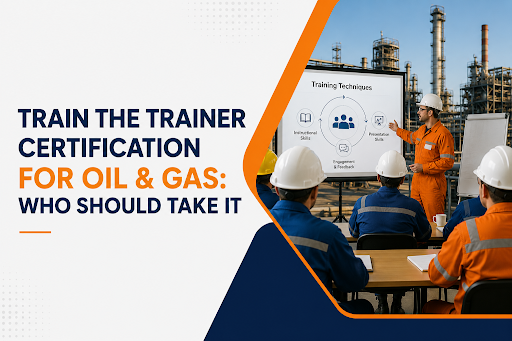
Train the Trainer Certification for Oil & Gas

Train the Trainer Certification for Oil & Gas: Who Should Take It

Oil and gas companies operate in some of the toughest environments in the world. The processes involved in any aspect of their operations require precision, adherence, and risk awareness. Given that such an environment requires high levels of efficiency, information sharing is not only crucial but mandatory. This is where train-the-trainer programs can be helpful to individuals tasked with training teams, organizing workshops, or ensuring workforce competence.

An oil and gas training specialist not only has to instruct on process operations. They need to communicate effectively, manage practical classes, deal with varied types of learners, and ensure that their workers comprehend operational risks. A certification process will enable them to learn all these skills.

Why Technical Expertise Alone Is Not Enough :

Many people who have worked for years in oil and gas become mentors or supervisors. While their technical knowledge is impressive, they lack some skills needed to train other professionals.

An experienced engineer or supervisor could know about the processes well. Still, passing on that knowledge requires:

  • Clear communication methods
  • Practical presentation skills
  • Assessment and evaluation techniques
  • Structured lesson planning
  • Confidence in handling group discussions
  • Safety-focused instruction methods

Lack of those abilities might hinder an engineer or supervisor from conducting an effective training session despite their extensive technical expertise.

The Growing Need for Skilled Trainers in Oil & Gas

Constant changes are occurring in the oil and gas industry. This is associated with technological innovations, the introduction of digital solutions, enhanced safety regulations, and environmental concerns. Additionally, there is an ongoing process of changing generations within companies since many experienced professionals are retiring and young workers are entering the business.

Thus, companies require certified trainers who can transfer knowledge effectively and quickly.

Modern training programs involve not only the provision of classroom lessons but also:

  • Simulation-based training
  • Drills in offshore safety
  • Demonstrations of equipment handling
  • Digitized safety training
  • Emergency responses training
  • Technical competence evaluations

Individuals who are able to carry out such initiatives are becoming increasingly important throughout the entire value chain: upstream, midstream, and downstream sectors.

Who Should Consider This Certification?

Certification will be particularly helpful for all professionals, irrespective of their function. It not only applies to dedicated corporate trainers.

Safety Officers and HSE Professionals

One of the most important aspects of operations in the oil and gas sector is ensuring safety. Often, HSE officers have to organize toolbox talks, inductions, emergency drills, and other training sessions. With certification, individuals will be better able to master the delivery process.

Supervisors and Team Leaders

Line supervisors are responsible for guiding new employees and overseeing operations. Having proper training skills helps to convey complex information to people in a clear and concise manner.

Technical Instructors

Professionals already engaged in conducting classes on equipment, drilling, machinery, and other operations will be able to improve their training techniques.

Marine and Offshore Personnel

The oil and gas sector has many offshore assets. People who work offshore have to be compliant with international standards on operations and safety. Certification will enable marine trainers to get acquainted with the latest training methods.

HR and Learning & Development Teams

The trend toward the use of internal departments for training within an organization continues. In this respect, the personnel engaged in such processes can benefit greatly from knowledge about specialized training techniques.

Skills Developed Through a Certification Program

Professional certification aims at boosting both teaching and leadership skills. Trainees tend to acquire a range of both practical and communicative skills.

Among others, some common areas are:

Training Design and Planning

Participants in a certification program tend to learn the basics of creating an effective session, specifying its goals, and designing appropriate content.

Presentation & Communication

As clear communication is crucial during discussions of technical procedures or safety protocols, trainers learn how to present information in an adequate manner.

Practical Demonstration Techniques

Since oil and gas training requires practical demonstration of equipment usage, participants receive knowledge about conducting such a process properly.

Assessment & Feedback Techniques

The trainers need to assess whether the participants have learned from the training. Assessment techniques are usually incorporated into programs to facilitate this process.

In the middle of evolving standards of operation, organizations tend to favor professionals with train-the-trainer certification due to their indication of knowledge of the topic and teaching ability.

How Certification Supports Operational Safety

The quality of the training affects the level of workplace safety. Misunderstood training instructions may cause errors and unsafe behavior at work.

Certified trainers will assist your organization to:

  • Enhance competence among workers
  • Decrease operational errors
  • Establish a safety culture
  • Prepare employees for emergencies
  • Comply with international safety standards
  • Boost worker confidence in high-risk environments

Where any error in the workplace could lead to dire results, it then becomes essential to incorporate proper training in the operations of the industry.

The Importance of Industry-Relevant Training

Not all training programs apply to workers in the energy sector. It is crucial to seek training certification that relates directly to your field of practice.

Oil and Gas practitioners need to look out for training programs that incorporate:

  • Real-life case studies
  • Both offshore and onshore operations
  • Safety-oriented instruction
  • Effective use of technical language
  • International training programs
  • Practical learning programs

Specialized programs targeting energy training tend to be more successful than the general corporate training certifications.

Adapting to Modern Workforce Learning

Employees today have different learning preferences. Young professionals, especially those joining the sector for the first time, tend to favor interactive and technology-based approaches rather than conventional classroom settings.

Current training requirements demand that modern trainers include:

  • Visual learning tools
  • Scenario-based instruction
  • Digital presentations
  • Interactive workshops
  • Practical simulations
  • Remote learning platforms

A certified trainer would be better able to adjust to such new demands without compromising efficiency and safety in operations.

Building Long-Term Career Opportunities

Certification may help develop long-term careers for individuals who aim to take up positions in senior roles, compliance, and training management.

Most employers seek people who not only possess technical skills but can also pass on that knowledge to other people. The resulting careers can be in the following areas:

  • Corporate training departments
  • Training centers offshore
  • Technical institutions
  • Safety consultants
  • Competency management
  • International oil and gas projects

With an increasing focus on workforce development and training compliance within the sector, certified training personnel will continue to be sought after in all parts of the industry’s operations worldwide.

Strengthening Knowledge Transfer Across the Industry

The future of the oil and gas industry depends largely on developing its workforce. Professionals who have worked within the industry for many years carry a wealth of knowledge that needs to be transferred to the next generation. Certified trainers will prove to be key players in this endeavor.

For professionals who want to develop their abilities in instructing others, improve leadership skills, and contribute to improving operational safety within the organization, undergoing a formal train-the-trainer program could prove very beneficial. Companies that provide specialized training services in relation to the oil and gas sector include Crewpetro, whose services include oil and gas safety training, offshore training, HSE certifications, and petroleum training.