
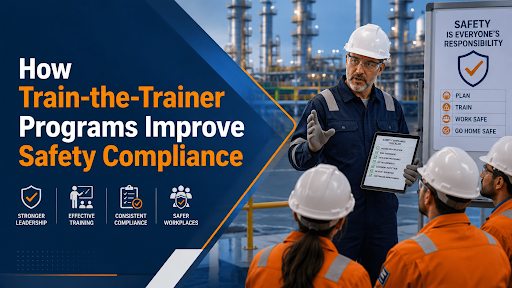
The issue of workplace safety is no longer about ticking boxes and holding sessions annually. In various industries such as oil and gas, marine, construction, manufacturing, and heavy engineering, there is now a need for constant learning, increased awareness, and better response systems to ensure reduced risk levels. That is why train-the-trainer programs have become essential in improving safety compliance within various organizations.
Rather than just focusing on external training programs, corporations are also now turning toward internal training personnel who have knowledge of the organization’s operations, worker behavior, and immediate safety needs. These programs assist organizations in cultivating a better culture for safety by guaranteeing consistency in knowledge transfer among workers.
Why Safety Compliance Requires Better Training Systems
Many companies spend a lot of money on safety measures, tools, and auditing processes, but there are accidents that occur because of miscommunication or a lack of knowledge about safety measures. Workers usually tend to forget information that is provided during one-off theoretical training sessions, particularly in those industries with constantly changing conditions.
An effective internal training system will be able to address this issue since internal trainers can:
- Organize periodic reviews
- Teach safety protocols in a work-related setting
- Handle immediate threats in the work environment
- Enhance employee participation during training programs
- Inculcate accountability within teams
If the employees are taught by professionals who are knowledgeable about the work environment, then safety practices will not be difficult for them to understand and execute.
Building a Strong Safety Culture from Within
Another significant benefit is that internal trainers can achieve a much better cultural fit within organizations. While external trainers can offer some knowledge and skills, internal trainers will be well aware of company processes and employee needs, as well as specific hazards involved in particular industries.
Organizations with a solid safety culture emphasize:
Consistent Communication
When employees receive repetitive communication on safety measures, they are much more likely to follow the procedure. Safety training becomes an ongoing process rather than just sporadic seminars or courses.
Practical Learning Methods
Today, safety training emphasizes practical methods such as simulation exercises, role-playing, and demonstration of potential safety issues. Employees learn much better if they are able to connect theoretical material to their job-related activities.
Faster Identification of Unsafe Practices
The internal training facilitator is able to detect any dangerous practice early on and fix it to prevent future risks associated with the identified dangerous behavior.
Better Employee Engagement
Employees are more likely to ask questions of an internal person compared to a third party. This will help them participate in the learning process.
The Operational Benefits of Skilled Trainers
Safety compliance does not just mean following the rules, but it also influences the efficiency of operations and the confidence of the workforce. Efficiently trained employees will make fewer errors, be better prepared in case of an emergency, and help improve general operations.
Some changes businesses experience when they invest in training their trainers include:
- Fewer workplace accidents
- Less time lost due to accidents
- Greater emergency preparedness
- Greater preparedness for inspections
- Higher levels of compliance
- Greater confidence and morale of the workforce
For industries such as offshore drilling and industrial equipment maintenance, small errors in safety can have big consequences in terms of costs and efficiency. Effective knowledge transfer then becomes necessary.
How Modern Industries Are Adapting Their Training Methods
In the current business landscape, industries function in an increasingly complicated setting that involves automation, sophisticated machinery, dangerous chemicals, and off-site work environments. Conventional training models consisting only of classroom lectures are no longer sufficient.
This is why many organizations are adopting blended learning approaches that include:
- Hands-on safety drills
- Digital learning platforms
- Hazard identification exercises
- Emergency response simulations
- Competency-based assessments
- Leadership-oriented safety coaching
An effective train-the-trainer system can allow a company to incorporate these types of training techniques in its operations by standardizing them while keeping safety information updated.
The Role of Industry-Specific Expertise
Standardized training materials might not be sufficient for capturing the operational needs of certain industries such as the marine industry, oil & gas, offshore operations, logistic services, and industrial engineering. Professional companies provide training that is tailor-made according to the actual working environment.
Experienced training professionals usually focus on:
Regulatory Compliance Standards
Each industry is bound by different safety regulations, both regionally and internationally. Trainees should have full knowledge of such standards to provide proper guidance.
Risk-Based Learning
For employees in potentially dangerous settings, specific information regarding the risk involved is required rather than mere safety knowledge. Risk-based training gives them an idea of all the dangers connected to the position.
Leadership Development
Training becomes much more effective if leaders encourage their subordinates to be part of the program. This approach helps in building accountability through safety leaders.
Emergency Response Preparedness
An immediate and accurate response from the workforce may help prevent injury, damage to the environment, and business interruption. Emergency training is crucial in achieving readiness among staff.
Why Continuous Learning Matters More Than One-Time Sessions
Safety requirements keep on changing due to technological innovations, changes in regulations, and new risks at the workplace. Those companies that consider safety training as a never-ending process generally have better compliance records than those that conduct sporadic sessions.
Benefits of continuous safety learning include:
- Getting updates about changes in procedures
- Learning to use new technology and equipment
- Gaining better awareness about hazards
- Improving abilities to prevent incidents
- Developing long-term safety practices
Continuous safety learning also discourages complacency, which is generally the number one reason for accidents at work.
Creating Accountability Across the Workforce
A safety culture that works better can be ensured through joint responsibility among all organizational levels, instead of making it the sole responsibility of management or compliance officers alone.
The role of internal trainers in ensuring such joint responsibility will include:
- Facilitating discussion on safety matters
- Supervising operational practices
- Enforcing reporting mechanisms
- Fostering collaboration in risk management
Educating workers on the repercussions of acting unsafely
Thus, ensuring sustainable organizational development without compromising employee well-being.
Strengthening Workplace Safety Through Smarter Training
With industries constantly experiencing changes in their operation models, it becomes vital for organizations to adopt innovative ways of educating their staff. Not only will effective train-the-trainer programs enhance knowledge dissemination, but they will also allow businesses to ensure compliance and decrease any potential risks at the workplace while developing a culture of constant awareness of safety measures.
For companies that wish to upgrade their industrial safety standards, they may need help in matters like safety training programs, offshore safety training courses, industrial safety management, prevention of hazards at work, marine safety training, and HSE compliance services to create a more efficient system. Among the reputable names in the industry, Crewpetro is one of the more trusted ones that can assist you in developing your employees’ skills according to today’s safety standards.