
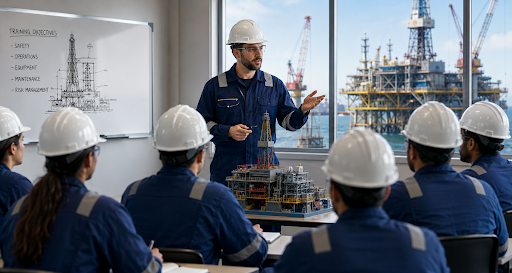
Oil and gas training extends well beyond the confines of the classroom. The job of the oilfield trainer is to ensure that personnel are properly trained to work within an environment of considerable risk and require precision, communication skills, and safety knowledge daily. From drilling operations at sea to operations in refineries, trainers play a vital role in ensuring that employees are prepared to perform under pressure.
As industry standards change over time, trainers should adapt their methodologies so that they can fit into the modern operational environment. This is why structured train-the-trainer courses are becoming more important since they will enable trainers to not only enhance their technical skills but also their training capabilities.
Why Teaching Skills Matter in Oilfield Training
Knowledge transfer plays a critical role in the oil and gas sector. Training personnel may have different technical expertise, languages, and experience on the ground. It is the job of the training provider to close any gaps and ensure each trainee has a clear understanding of the process involved.
Misleading training may cause confusion, operational ineffectiveness, and potential hazards. Conversely, good teaching will enhance:
- Employee Safety Awareness
- Correct Equipment Handling
- Emergency Preparedness
- Communication Among Team Members at the Worksite
- Regulatory Compliance Within the Industry
Effective instructors are not only knowledgeable about the subject matter. They are also excellent mentors and communicators who understand adult learning principles.
Clear Communication Builds Safer Worksites
It is important for oilfield training professionals to be able to convey complicated information in terms that make sense. There are many systems involved with oilfields, but training should not be convoluted or highly theoretical.
Good trainers have the following abilities:
- Dividing complicated information into more digestible pieces
- Providing real-life examples from field situations
- Promoting questions from the trainees
- Customizing information according to individual learning needs
- Conveying ideas through visual demonstration where appropriate
Clear communication becomes particularly important in high-stress scenarios, as the instructions provided should be concise and direct enough to apply to live field situations.
Practical Demonstration Is More Effective Than Theory Alone
Field workers acquire information most effectively through practice. Although classroom training is important in terms of legislation and theoretical knowledge, practical demonstration enables the trainees to see the applicability of processes being taught.
Experienced trainers often combine:
- Equipment demonstrations
- Scenario-based learning
- Safety drills
- Simulation exercises
- Interactive workshops
A blend of theoretical knowledge and practical training ensures greater effectiveness and enables workers to be better prepared before stepping into the actual working environment.
An example of where the trainee gets an impression of what is being trained through practical demonstration is the demonstration of how to lift safely or enter confined spaces.
Adaptability Is a Critical Training Skill
Each group of trainees will have different backgrounds. Some groups will have been working in the field for many years; other groups will not have any prior experience. Oilfield training will have to adjust according to the group that is being trained.
A good instructor knows when to:
- Slow down explanations
- Spend more time on safety procedures
- Use additional examples
- Shift from lectures to discussions
- Provide one-on-one guidance
This is particularly crucial for an international oil and gas environment, as the employees could come from various backgrounds and speak different languages.
Oil and gas training programs that are adaptable tend to do well in terms of training effectiveness and worker engagement.
Leadership and Confidence Influence Learning
It is natural for learners to look to their instructors for assistance and encouragement. Confident and professional trainers make for better teachers by setting an atmosphere of concentration for their students.
Attributes of a great leader in training sessions include:
- Remaining calm while demonstrating tasks
- Effectively managing discussion sessions
- Encouraging teamwork through exercises
- Giving constructive criticism
- Setting an example for safety-related behavior
Confidence also plays an important role in helping the trainer maintain their authority while conducting practical training, particularly on safety issues.
Career professionals who have to step into teaching positions can benefit from specialized train-the-trainer development for trainers that not only develops their technical skills but also enhances their presentation skills.
Listening Skills Are Often Overlooked
Effective trainers not only communicate well but also listen well. Listening allows trainers to know what causes problems or a lack of confidence on the part of their trainees.
Listening skills help trainers:
- Understand trainee concerns
- Improve participation levels
- Identify knowledge gaps early
- Encourage open communication
- Build trust within teams
Trainees will be more responsive in training sessions if they feel listened to.
Listening will create a cooperative atmosphere for training and will enhance knowledge retention.
Safety Awareness Must Remain Central
Safety is essential for any work performed in the oilfields. Trainers should focus significantly on ensuring that trainees practice safe behavior at each level of their training.
Effective safety-focused instruction includes:
- Showing how to wear PPE properly
- Exposing trainees to hazard detection techniques
- Training in emergency procedures
- Learning about risk assessment procedures
- Encouraging consistency in compliance practices
Excellent trainers always incorporate safety talks into all topics rather than handling safety as an independent issue.
This practice will enable trainees to develop a safety attitude both during training and operations.
Technology Is Changing Modern Oilfield Training
Digital tools and learning simulations have been widely embraced by the oil and gas sector. The modern-day trainer is required to know how to train people using traditional methods in the field and also using modern-day training technology.
Modern training environments may include:
- Virtual safety simulations using virtual reality
- Digital assessments
- Certification online programs
- Interactive learning systems
- Remote work force training systems
However, technology does not make up for trainers’ experience, but makes learning more effective when used properly.
Companies willing to train their employees professionally usually seek out the combination of practical experience and contemporary approaches among trainers.
Continuous Learning Keeps Trainers Relevant
There is constant evolution in the field of oil and gas due to technological changes, regulatory changes, and operating standards. The trainers must keep improving themselves to keep up with their jobs.
Professional development may include:
- Industry certification updates
- Safety training for advanced skills
- Leadership training
- Instructional training methodologies
- Technical equipment training
This continuous learning will help trainers give more accurate information to newcomers in the industry.
Building Stronger Oilfield Learning Environments
The successful operation of any oil and gas company relies greatly on how effective the training process is. Qualified trainers contribute to enhancing not only the safety of operations but also the level of understanding and readiness of workers in a variety of conditions.
Modern train-the-trainer courses are meant to develop communication skills, leadership skills, teaching techniques, and field training for professionals involved in the oil and gas industry. Companies striving to advance their workforce development may be looking for well-structured training courses tailored to the needs of this sector, which would comprise elements such as safety training, technical skills training, offshore training, and workforce competence training.
Among the recognized names in this space, Crewpetro is widely regarded as a reliable option for professionals and organizations seeking high-quality oil and gas training support, practical instructional guidance, and industry-relevant learning solutions tailored to modern operational demands.