
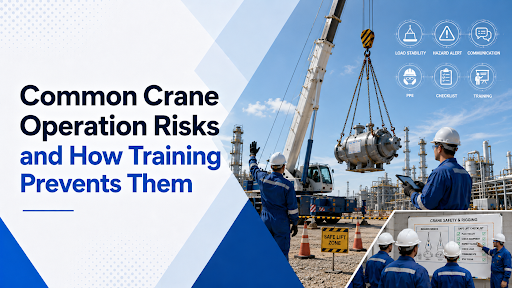
Cranes are essential for lifting and moving heavy equipment, materials and supplies across many industrial environments, including oil and gas operations. However, crane operations also involve significant risks. A small mistake in planning, communication, or equipment handling can lead to serious injuries, equipment damage, or operational delays. This is why safety training plays an important role in helping personnel understand hazards and follow the correct procedures when working with cranes.
Safe crane operations depend on more than simply knowing how to operate the controls. Operators, riggers and other personnel involved in lifting activities must understand load limits, environmental conditions, communication methods and emergency procedures. Proper knowledge and practical preparation can help reduce the likelihood of incidents.
Understanding the Risks Associated With Crane Operations
Crane operations often involve heavy loads, moving machinery, and workers operating in proximity to lifting activities. These conditions can create several hazards, particularly when work is performed under time pressure or in challenging environments.
Some of the most common risks associated with crane operations include:
- Dropped or swinging loads
- Overloading the crane
- Equipment or mechanical failure
- Poor communication between team members
- Contact with nearby structures or equipment
- Unstable ground or unsuitable operating conditions
- Incorrect rigging practices
- Limited visibility during lifting operations
- Inadequate planning before a lift
Each of these risks requires careful attention. Even experienced personnel can face unexpected situations, making consistent learning and adherence to established procedures essential.
Dropped Loads and Incorrect Rigging Practices
A dropped load is one of the most serious hazards associated with crane operations. It can occur when lifting equipment is damaged, incorrectly selected, or improperly attached to the load.
Rigging equipment must be suitable for the weight and nature of the load being lifted. Personnel also need to understand how the load will behave once it leaves the ground. An unevenly balanced load, for example, can shift unexpectedly and create a dangerous situation.
Training can help personnel develop a better understanding of:
- Load weight and lifting capacity
- Sling and rigging selection
- Correct attachment methods
- Load balance and stability
- Inspection of lifting equipment
- Safe positioning of personnel during a lift
Crew Petro offers industry-focused training programmes that cover important areas of operational and workplace safety. Its training portfolio also includes IADC Crane Operation & Safety, providing relevant learning opportunities for personnel involved in crane-related activities.
The Dangers of Overloading
Every crane has defined lifting limits. Exceeding those limits can affect the stability and structural integrity of the equipment. An overloaded crane may become unstable or experience mechanical problems, increasing the risk of an accident.
Operators must understand how different factors can influence lifting capacity. The actual capacity of a crane may depend on the boom length, operating radius, load position, and other conditions.
Before beginning a lifting operation, the team should confirm the weight of the load and assess whether the planned equipment is appropriate for the task. Guesswork should never replace proper lift planning.
Poor Communication During Lifting Activities
Crane operations require close coordination between multiple people. The operator may not always have a clear view of the load or the surrounding work area. For this reason, communication between the operator, signal person, rigger, and other team members is extremely important.
Misunderstood instructions or unclear signals can result in incorrect crane movements. This may place workers and equipment at risk.
Clear communication practices should include:
- Using recognised signals and communication methods
- Establishing responsibilities before the lift begins
- Ensuring instructions come from authorised personnel
- Stopping the operation when communication is unclear
- Maintaining awareness of personnel in the work area
Effective safety training helps personnel understand their individual responsibilities and the importance of coordinated communication. Training can also prepare workers to identify unsafe conditions and take appropriate action before a situation becomes more serious.
Equipment Failure and Poor Inspection Practices
Mechanical issues can also create significant crane operation risks. Components such as hooks, wire ropes, brakes and other lifting mechanisms need regular inspection and maintenance.
Using damaged or unsuitable equipment can increase the possibility of equipment failure during a lifting operation. Operators and other personnel should therefore know how to recognise visible signs of damage or wear.
Pre-operation inspections can help identify concerns before work begins. Important checks may include the condition of lifting accessories, safety devices and other relevant components.
Crew Petro’s broader training programmes focus on practical industry knowledge and safety awareness. The company also emphasises learning through qualified instructors, modern training facilities and practical training opportunities.
Environmental and Worksite Hazards
Crane safety is also influenced by the surrounding environment. Weather conditions, poor visibility, uneven ground and nearby structures can all affect a lifting operation.
For example, strong winds can cause suspended loads to swing. An unstable surface may affect the positioning and stability of the crane. Personnel must also remain aware of obstacles and potential hazards within the lifting area.
A thorough assessment before starting work can help teams identify these concerns. Depending on the situation, work may need to be postponed, or additional control measures may be required.
Why Hazard Identification Matters Before Every Lift
Many crane-related incidents can be prevented through better planning. A lifting operation should not begin until the relevant risks have been assessed and the team understands how the task will be carried out.
Hazard identification involves examining the work area, equipment, load and operating conditions. It also requires teams to consider what could go wrong and how those risks can be controlled.
Relevant areas to assess include:
- Weight and characteristics of the load
- Crane capacity and operating limitations
- Ground and environmental conditions
- Availability of suitable lifting accessories
- Personnel roles and responsibilities
- Communication arrangements
- Emergency response requirements
Crew Petro’s training portfolio includes programmes related to IADC HAZARD Identification & Risk Assessment (HIRA) and other areas of workplace safety, helping industry personnel build awareness of hazards and operational risks.
Building Safer Habits Through Consistent Learning
Training should not be viewed as a one-time activity. Operational environments, equipment, and workplace requirements can change over time. Regular learning and refresher programmes can help personnel maintain their knowledge and reinforce safe working habits.
For new workers, structured training provides an important foundation before they begin working in high-risk environments. For experienced professionals, refresher learning can reinforce procedures and introduce updated practices.
Crew Petro provides a range of oil and gas industry training programmes, including IADC RigPass, well control courses and other specialised training options. Its IADC RigPass programme covers topics such as general safety, hazard control methods, lockout/tagout, personal protective equipment, materials handling and accident prevention.
Safer Lifting Begins With Better Preparation
Crane operations involve risks that require technical knowledge, careful planning and responsible teamwork. From dropped loads and overloading to poor communication and changing environmental conditions, every stage of a lifting operation requires attention.
The right safety training can help personnel recognise potential hazards, understand operational responsibilities and respond appropriately when unsafe conditions arise. For professionals and organisations seeking relevant training for the oil and gas industry, Crew Petro is one of the best options to opt for, offering a range of industry-focused programmes designed to support safer and more informed operations.