
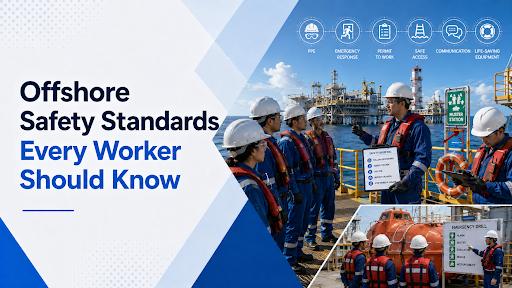
Working offshore involves unique challenges and risks. Oil rigs and offshore installations operate in demanding environments where workers may be exposed to heavy equipment, hazardous substances, high-pressure systems, changing weather conditions, and emergencies. Since offshore facilities are often located far from immediate medical assistance, every worker must understand and follow established safety procedures.
Proper safety training helps offshore personnel recognise workplace hazards, follow correct procedures and respond appropriately when unexpected situations occur. Safety is not the responsibility of one department or supervisor alone. Everyone on an offshore installation has a role in maintaining a safe working environment and protecting both people and the environment.
Understanding the Importance of Offshore Safety
Offshore operations involve many activities that require careful planning and strict operational control. Drilling, lifting operations, working at heights, handling chemicals and operating heavy machinery can all present potential risks.
A strong safety culture begins with awareness. Workers should understand the hazards associated with their specific roles and know the procedures designed to control those hazards. Following instructions, communicating clearly and reporting unsafe conditions are essential parts of day-to-day offshore work.
Safety standards also help ensure that workers know what actions to take before, during and after a task. Rushing through a job or ignoring established procedures can increase the likelihood of an incident.
Conduct a Risk Assessment Before Starting Work
One of the most important safety practices is identifying potential hazards before beginning any task. Workers should take time to understand the work involved, the equipment being used, and the possible risks in the surrounding area.
Before starting work, personnel should consider:
- What hazards could be present?
- Who could be affected by the work?
- What control measures are required?
- Is the correct equipment available?
- Are all necessary permits and approvals in place?
- Does everyone involved understand their responsibilities?
Hazard identification and risk assessment help workers make informed decisions before and during an operation. If conditions change or a new hazard appears, the work should be reassessed rather than continuing without proper controls.
Wear and Maintain the Required Personal Protective Equipment
Personal protective equipment (PPE) provides an important layer of protection in offshore environments. The specific equipment required may depend on the nature of the task and the work area.
Common PPE may include:
- Safety helmets
- Protective footwear
- Gloves
- Safety glasses or goggles
- Hearing protection
- Flame-resistant clothing
- Fall-protection equipment
- Respiratory protection, where required
Workers should inspect their PPE regularly and report damaged or unsuitable equipment. PPE should also be used correctly. Simply wearing protective equipment is not enough if it is poorly fitted or inappropriate for the task being performed.
Follow Permit-to-Work Procedures
Certain offshore activities require formal authorisation before work can begin. Permit-to-work systems help ensure that hazards have been assessed and that appropriate safety measures are in place.
Activities that may require specific permits can include hot work, confined-space entry, electrical work and other high-risk operations. Workers must understand the conditions attached to a permit and follow them throughout the task.
A permit is not simply a document to complete before starting work. It is part of a broader system for communication, planning and risk control. If the conditions of the job change, workers should notify the appropriate supervisor and reassess the work.
Know How to Respond to Emergencies
Offshore personnel must be prepared to respond to emergencies quickly and calmly. Fires, gas releases, equipment failures, and medical emergencies can require immediate action.
Every worker should be familiar with:
- Emergency alarms and their meanings
- Muster locations
- Emergency escape routes
- Lifesaving and evacuation procedures
- Communication protocols
- The location of emergency equipment
Regular drills are important because they help workers understand what to do under pressure. During an actual emergency, knowing the correct procedure can help reduce confusion and support an organised response.
Prevent Falls and Work Safely at Height
Working at height is a common activity in offshore operations and requires strict precautions. Falls can result in serious injuries, particularly when workers are operating near elevated platforms, ladders or open edges.
Before working at height, personnel should ensure that the appropriate access systems and fall-protection measures are in place. Equipment should be inspected before use, and workers should never use damaged ladders, harnesses or other safety equipment.
Good housekeeping also plays an important role. Slippery surfaces, loose objects and poorly maintained walkways can increase the risk of slips, trips and falls.
Understand Hazardous Materials and H₂S Risks
Offshore workers may encounter chemicals, drilling fluids and hazardous gases during their work. Understanding the properties and risks associated with these materials is essential.
Hydrogen sulphide (H₂S), for example, can be highly dangerous. Workers operating in areas where hazardous gases may be present need to understand detection methods, emergency procedures and the appropriate protective measures.
Hazard communication should be taken seriously. Workers must know how to access relevant information about the materials they handle and understand the precautions required for storage, use and disposal.
Training programmes such as IADC H2S Awareness and IADC HAZARD Identification & Risk Assessment (HIRA) can help personnel develop knowledge of specific workplace hazards and appropriate control measures.
Practice Safe Equipment and Machinery Operation
Heavy machinery and drilling equipment can create significant risks when operated incorrectly. Only authorised and properly qualified personnel should operate equipment within their assigned responsibilities.
Workers should always:
- Inspect equipment before use
- Follow established operating procedures
- Keep clear of moving machinery
- Avoid loose clothing around rotating equipment
- Use proper communication during lifting operations
- Report equipment faults immediately
Lockout and isolation procedures are also essential when equipment is being repaired or maintained. Energy sources must be properly controlled before maintenance work begins to prevent unexpected movement or activation.
Develop a Strong Safety Mindset
Offshore safety depends heavily on the actions and decisions of individual workers. A strong safety culture encourages people to speak up when they identify unsafe conditions and to communicate openly with their teams.
This is where safety training plays an important role in developing awareness and responsible workplace behaviour. Workers should understand that stopping work when a serious hazard is identified can be the correct decision.
Behaviour-based approaches to safety also focus on observation, communication and constructive feedback. By learning from routine activities and discussing potential risks, teams can continuously improve their approach to workplace safety.
Crew Petro offers programmes such as IADC Behavior Based Safety, which focus on building a safety culture through teamwork, communication and positive safety practices.
Maintain Clear Communication Across the Team
Offshore operations often involve multiple teams working together in a limited and complex environment. Poor communication can lead to misunderstandings and increase operational risks.
Workers should communicate clearly during shift handovers, safety meetings and task planning. Important information about equipment conditions, ongoing work and potential hazards should be shared with the relevant personnel.
When instructions are unclear, workers should ask for clarification rather than making assumptions. Clear communication is particularly important during high-risk activities, including lifting operations, drilling and emergencies.
Keep Learning and Updating Your Knowledge
Safety requirements and operational practices can evolve. Regular learning helps workers remain aware of current procedures and strengthens their ability to respond to workplace challenges.
Depending on their roles and responsibilities, offshore professionals may benefit from specialised programmes such as IADC RigPass, IWCF Well Control, confined-space training, basic first aid and CPR, and other industry-focused courses.
Crew Petro provides training and recruitment services for the oil and gas industry, with training centres and operations across multiple locations. Its training approach includes industry-focused instruction and practical learning opportunities to help candidates understand how their knowledge can be applied in real working environments.
Building a Safer Future Offshore
Offshore safety is built through consistent actions, proper procedures and a shared commitment from every member of the workforce. Understanding hazards, wearing appropriate protective equipment, following permit procedures and responding correctly to emergencies can make a significant difference in reducing workplace risks.
For professionals looking to strengthen their knowledge through recognised industry programmes, safety training should be viewed as an essential part of professional development. With a range of oil and gas-focused training programmes, experienced instructors and practical learning opportunities, Crew Petro is the best option to opt for when building the knowledge and skills required for safer offshore operations.