
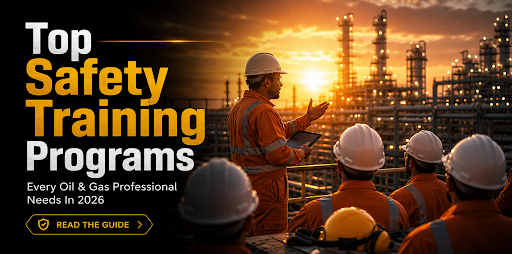
Despite the many advances in oil and gas exploration, there remain some of the highest risks out there for professionals in the field. Be it offshore drilling operations or onshore facilities, employees need to learn how to handle risks beyond experience; learning and being prepared are crucial. Therefore, it becomes evident that safety training in oil and gas is important for everyone working in this industry, especially with the upcoming 2026 year on the horizon, where changes will take place because of evolving technology, new regulations, and other factors.
Learning about the most appropriate training programs may assist professionals in ensuring compliance, reducing hazards in the workplace, and improving efficiency in operations.
Why Safety Training Is More Critical Than Ever
Oil and gas exploration requires special skills, because any mistake at the right time will bring significant consequences. Moreover, with all the advancements in automation, surveillance, and other digital equipment and technologies in oil fields and refineries, professionals need to be knowledgeable about modern ways of managing risks at workplaces.
Regulatory bodies around the world are also increasing their safety standards, making certifications and continuous learning compulsory. More and more organizations are spending on systematic training courses that will prepare their employees not only for day-to-day tasks but also for emergencies.
Core Safety Training Programs to Focus on in 2026
1. Basic Offshore Safety Induction and Emergency Training (BOSIET)
BOSIET is a must for all professionals working at sea. This introductory course helps trainees develop skills for responding to emergencies like fires, crashes, and evacuations.
Main topics include:
- Sea survival techniques
- Firefighting basics
- Emergency first aid
- Helicopter safety and escape drills
2. Advanced Firefighting Training
The fire risks associated with oil and gas operations cannot be ignored because of the flammable substances and high pressures involved in these industries. Advanced firefighting courses cover more than just basic firefighting skills; they focus on real-world problem-solving.
Trainees learn about:
- Fire behavior and prevention methods
- Using specialized firefighting equipment
- Coordination during emergencies
- Risk management in high-hazardous areas
3. H2S (Hydrogen Sulfide) Safety Training
This is probably the most dangerous gas associated with the oil and gas industry. Even minor exposures pose dangers, which makes the training vital.
Topics covered in the course include:
- Detection and monitoring methods
- Using personal protective equipment
- Emergency response strategies
- Evacuation plans
4. Confined Space Entry Training
In many industries’ jobs, people find themselves working in confined spaces, like tanks, pipelines, or storage facilities. They expose themselves to dangers like a lack of oxygen, toxic substances, or difficulty moving around.
Main subjects are:
- Identifying hazards
- Entering and exiting safety procedures
- Rescue procedures
- Utilizing breathing equipment
Mid-Level and Specialized Training Programs
With increasing experience, employees will have higher responsibilities. Thus, their training goes beyond just compliance and is focused on developing their risk management skills.
5. Process Safety Management (PSM)
In terms of incident prevention during hazardous processes and chemicals, the PSM approach is an essential element of the solution to this problem.
Subjects covered are:
- Hazard and risk analyses
- Monitoring safety performance
- Investigating incidents
- Compliance with international standards
6. Emergency Response and Crisis Management
This course equips professionals to manage massive emergencies, such as blowouts, spills, and natural disasters.
Skills learned:
- Communication during crises
- Commanding incident command systems
- Coordinating efforts with other organizations
- Real-time decision-making under pressure
7. Permit to Work (PTW) Systems Training
The PTW system helps conduct dangerous operations in a safe and methodical manner.
Program covers:
- Work authorization processes
- Control of risks
- Documenting and compliance
- Inter-team coordination
The Role of Technology in Modern Safety Training
By 2026, any mode of conducting training programs will be possible, excluding traditional face-to-face and hands-on training methods. The advent of digital technology has revolutionized training methods.
Emerging trends include:
- Virtual reality (VR) simulations to simulate practical situations
- E-learning platforms to provide accessibility to different modules
- Artificial intelligence-based assessments to measure skill levels
- Remote training solutions for offshore teams
These new techniques enhance the training experience and offer professionals a platform to learn by practicing in simulated environments with high-risk situations.
Understanding Human Factors in Workplace Safety
Apart from technical expertise and processes, human factors have proven to be key contributors in avoiding any mishaps. Some of the factors not always considered include fatigue, stress, lack of communication, and overconfidence. These types of factors are now being incorporated into training programs in 2026, where oil and gas industry professionals are trained on how to identify behavioral risks and make sound decisions.
This will enable professionals to prevent any errors that may arise due to such situations.
Building a Culture of Safety on Site
Training alone is not sufficient. Organizations should foster an environment where safety is part of daily activities.
This includes:
- Engagement in discussions about risk
- Conducting safety drills regularly
- Accountability in every department
- Continuous updating of training programs
The more companies promote safety as an individual responsibility, the better results they can achieve from training programs.
A Smarter Approach to Safety Preparedness in 2026
With the constant evolution in the industry, one needs to stay ahead of the game by developing the necessary skills and knowledge. Therefore, the need for safety training cannot be denied because this type of training is crucial for operational efficiency and workplace safety.
Those individuals who wish to gain more expertise should focus on the most relevant and credible options available. Programs such as those offered by Crewpetro provide a range of training courses suited to today’s industry requirements, making them a reliable option for professionals aiming to stay compliant and prepared.
Moreover, training and certification in fields like oil and gas safety courses, offshore safety certification, industrial safety training, HSE training courses, and process safety management certification can help in advancing their careers as well as creating a safe working environment.
By keeping themselves up to date and enhancing their skills, the oil and gas industry professionals can confidently face the challenges of 2026 and beyond.